
Breakouts on Chin: What Causes Chin Acne and How to Clear It
Why breakouts cluster on the chin and jawline, how to tell hormonal acne from friction and perioral dermatitis, and the routine that clears it in 12 weeks.
Updated October 2026
Breakouts on the chin and jawline that return around the same time every month, sit deep and tender under the skin and leave dark marks behind are the classic pattern of adult acne. Oily skin, combination skin and sensitive skin all get it, and most chin acne settles with a consistent routine within 8 to 12 weeks, once you know which of four causes is behind it.
The chin is where three things meet. The oil glands of the lower face respond strongly to hormones, your hands, phone and mask rest on that area all day, and the skin around the mouth reacts to heavy creams and lip products. Face-mapping charts link chin spots to the stomach or other organs, and that part has no support in research. What dermatologists do see is that the pattern of the bumps tells you which of those three forces is at work, and the fix follows from the pattern.
We're the SKIN1004 guide team. This guide explains why the chin breaks out, how to tell the four common causes apart, which ingredients clear chin acne and how to build the routine. It ends with where our Azelaic Acid 10 Ampoule, USD 20.40 for 30ml, comes in: azelaic acid 10.2% plus two azelaic derivatives, with centella asiatica, panthenol and licorice root extract.
Why the chin breaks out
Acne starts in the pore. Oil glands make sebum, dead cells build up at the opening of the pore, and the two form a plug. Behind the plug, the bacteria that normally live on skin multiply and trigger inflammation, which turns a blocked pore into a red, swollen pimple.
The lower face has a specific reason to follow that path. Oil glands carry receptors for androgens, the hormones that rise and fall through the menstrual cycle and with stress, and the glands along the chin and jaw are among the most responsive. Studies of adult women with acne find the lesions concentrated on the lower third of the face far more often than on the forehead, which is the opposite of the T-zone pattern common in teenagers.
Pressure and heat add a second trigger. Resting your chin in your hand, a phone pressed against the jaw, a helmet strap or a face mask all trap heat and sweat and rub the skin, and dermatologists call the breakouts that follow acne mechanica.
Four causes of breakouts on chin
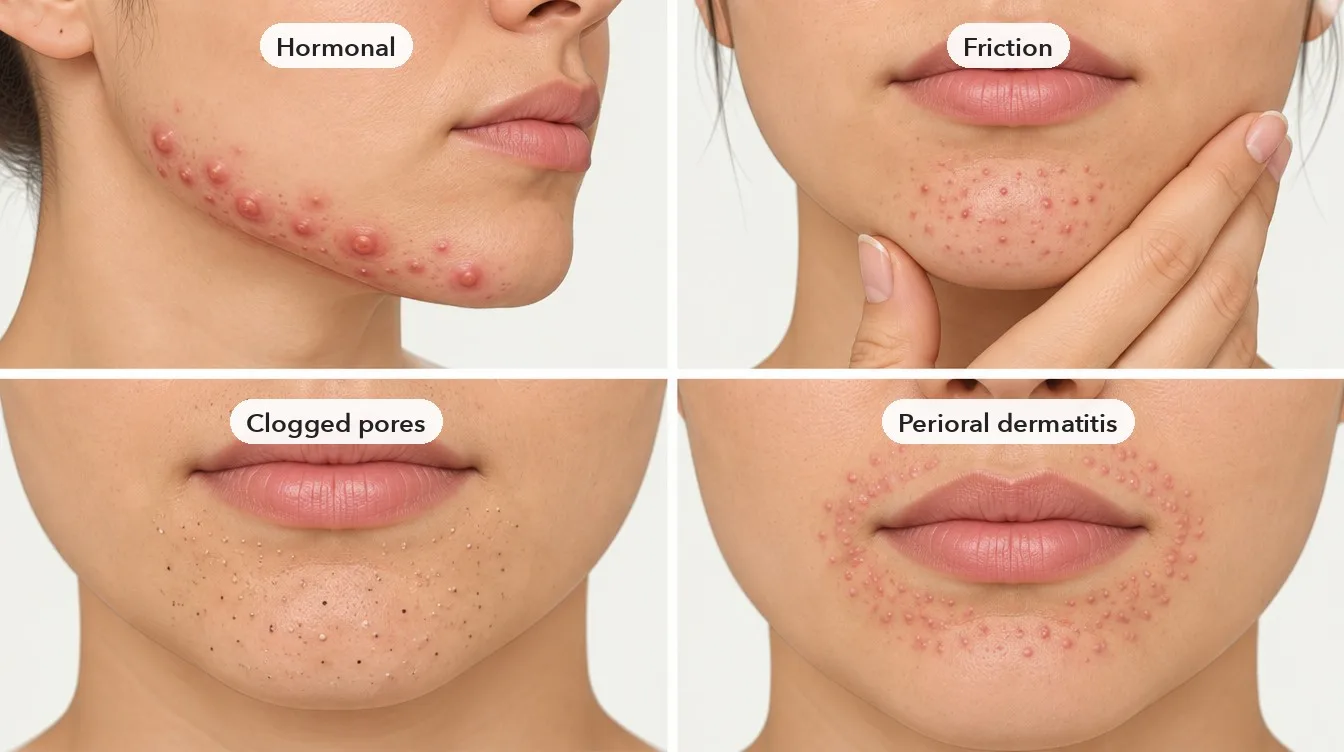
The way the bumps look and when they appear point to the cause. Many people have two at once, so it helps to check each row.
| Pattern | What it looks like | Likely cause | First step |
|---|---|---|---|
| Hormonal | Deep, tender bumps along the chin and jaw, flaring the week before a period | Androgen sensitivity of the oil glands | A daily topical routine; a dermatologist can add hormonal treatment |
| Friction | Small red bumps exactly where something touches the skin | Acne mechanica from hands, phone, straps or masks | Remove the contact, clean what touches the skin |
| Clogged pores | Whiteheads and blackheads, skin feels rough | Comedones from oil and dead cells | Retinoid or salicylic acid, non-comedogenic products |
| Perioral dermatitis | Tiny clustered bumps around the mouth and nose, with a clear rim next to the lips, burning | Reaction to heavy creams, steroid creams or fluoride toothpaste | Stop the trigger products and see a dermatologist |
Perioral dermatitis is the one to rule out first. It looks like acne, and acne products such as benzoyl peroxide and strong exfoliants can make it worse. If your bumps cluster around the mouth, sting more than they hurt and spare a thin line of skin at the lip border, a dermatologist can confirm it and prescribe a treatment.
Ingredients that clear chin acne
Topical treatments work on the steps of the pore cycle. The best routine uses one or two of them and keeps the rest of the skincare simple.
Adapalene is a retinoid sold over the counter at 0.1%. It keeps dead cells from plugging the pore, which makes it the base treatment for whiteheads and blackheads and for preventing new deep bumps.
Benzoyl peroxide at 2.5% to 5% kills acne bacteria and works well on red, inflamed pimples. Higher strengths dry the skin with little added benefit.
Salicylic acid dissolves oil inside the pore and helps with clogged pores on oily skin.
Azelaic acid reduces acne bacteria, slows the buildup of dead cells and calms redness. It also fades the dark marks that chin breakouts leave behind, called post-inflammatory hyperpigmentation, which is a frequent concern in medium and deeper skin tones. Dermatology guidelines list it among the recommended topical acne treatments, and it is one of the few that suits sensitive skin.
For deep, recurring hormonal breakouts, topicals handle the surface and prevent new plugs, and dermatologists often add oral treatment such as spironolactone or a combined contraceptive pill. If bumps are painful, leave scars or keep coming back after 12 weeks of a steady routine, that is the point to book an appointment.
A routine for chin acne
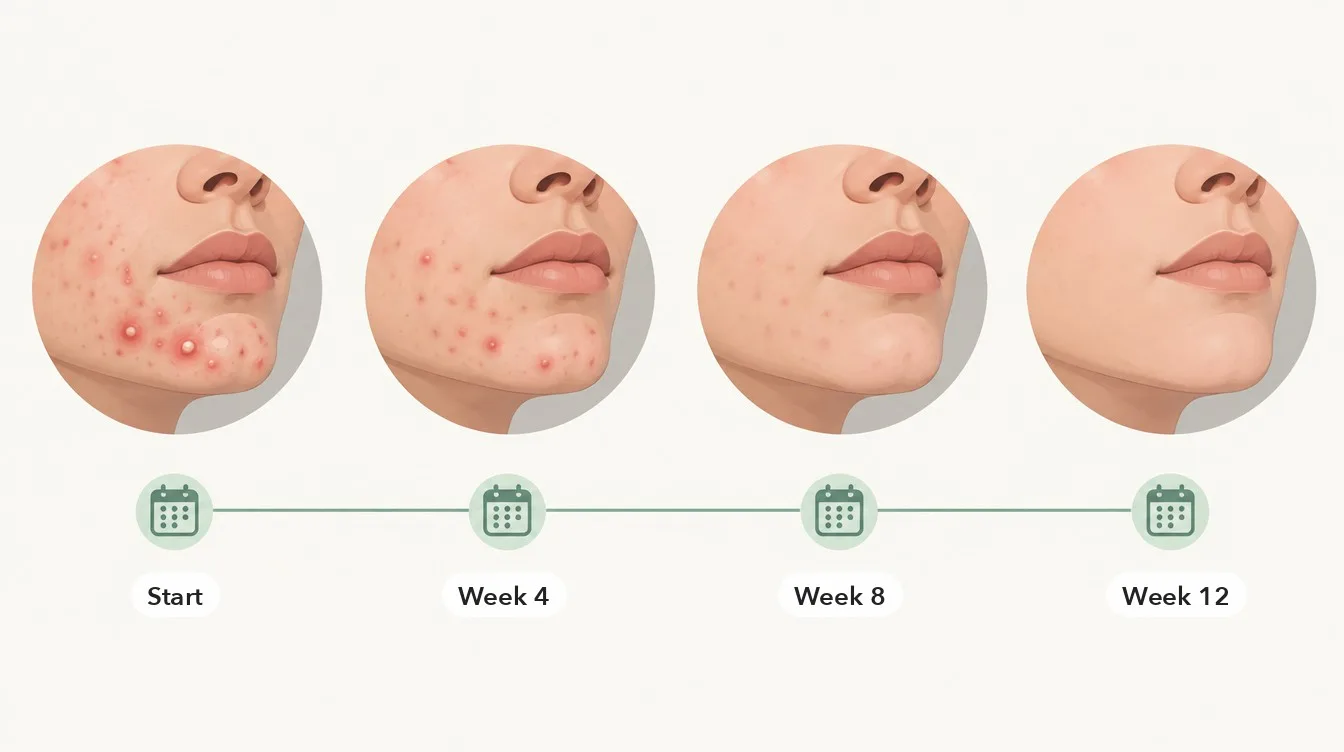
The routine works when it stays the same for long enough. Skin renews its outer layer in about four weeks, and acne treatments need two to three of those cycles to show their full effect.
- Morning: cleanse with a gentle cleanser, apply your azelaic acid or benzoyl peroxide product, then a light non-comedogenic moisturizer and sunscreen.
- Night: cleanse, apply a retinoid such as adapalene to dry skin, then moisturizer. If your skin is sensitive, start the retinoid every other night.
- Through the day: keep hands off the chin, wipe your phone screen, change pillowcases twice a week and wash fabric masks after one wear.
Sunscreen matters more than it seems for chin acne. UV darkens the marks that breakouts leave, so daily protection shortens how long they stay visible. If your sunscreen seems to cause breakouts, Non-Comedogenic Sunscreen When Dry Skin Still Breaks Out covers what to look for. Acne treatments also dry the skin, and a dry, irritated barrier breaks out more easily; Acne Treatments Drying Your Skin? Choosing a Barrier Serum explains how to keep the routine comfortable.
Squeezing deep chin bumps pushes inflammation further into the skin and raises the chance of scars and dark marks. A warm compress for a few minutes eases the pressure, and a hydrocolloid patch keeps fingers away from surface pimples.
Where Azelaic Acid 10 Ampoule comes in
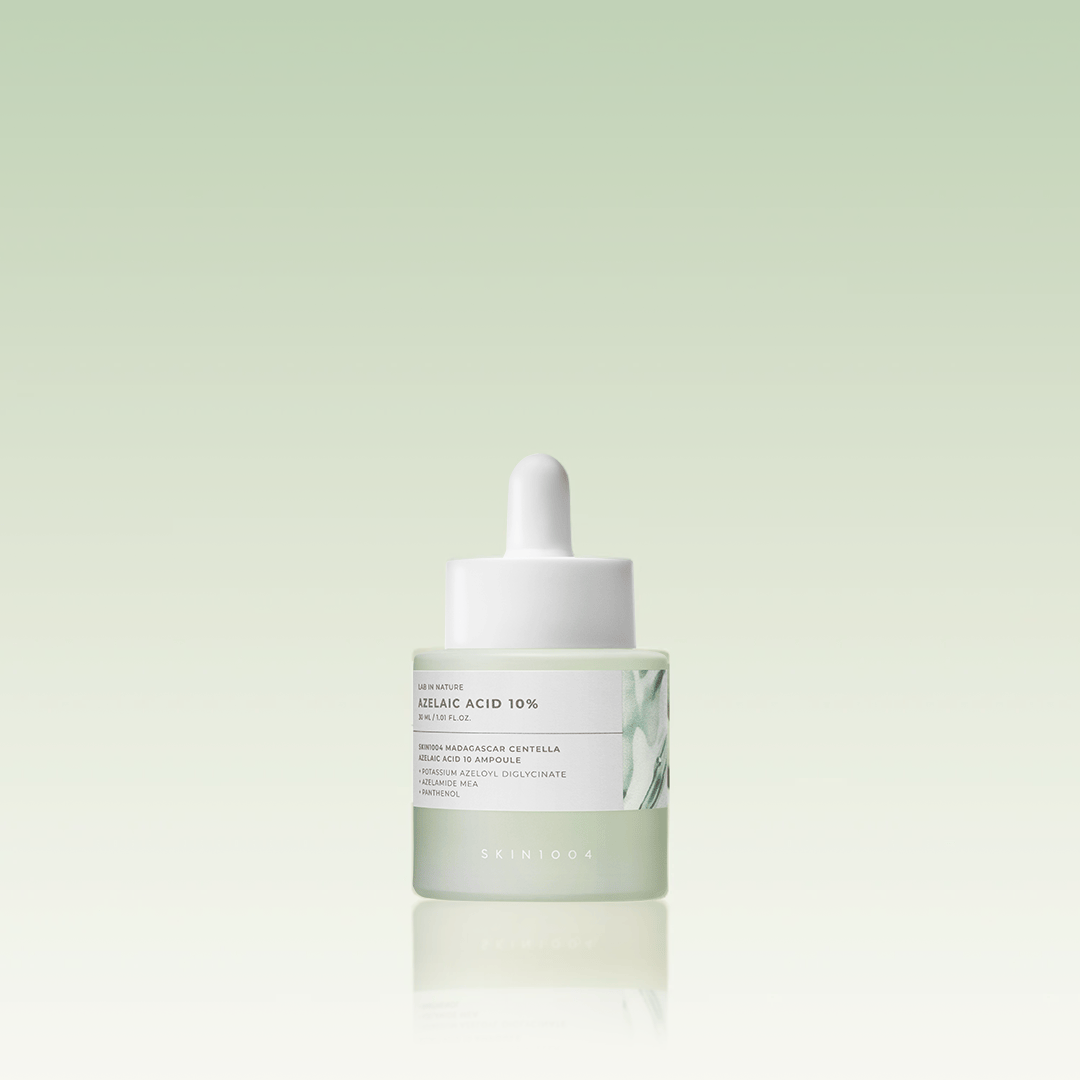
SKIN1004 Azelaic Acid 10 Ampoule is a leave-on ampoule for blemish-prone skin, visible redness and the marks that breakouts leave, the three problems that chin acne brings together.
Formula. It combines azelaic acid at 10.2% with two azelaic derivatives, potassium azeloyl diglycinate and azelamide MEA, at 1.5%. Centella asiatica extract, panthenol, allantoin, sodium hyaluronate and licorice root extract support the skin while the azelaic acid works.
Tested results. In a 4-week human application test with 21 adults with facial acne, inflammatory acne lesions decreased by 25.58% and non-inflammatory lesions by 13.02%, and sebum secretion improved by 53.98%. In a separate human application test with 21 adults, skin redness improved by 24.95% right after one use. The ampoule has also completed a sensitive-skin irritation test and a 24-hour primary skin irritation patch test.
How it works for you depends on your breakouts. If your chin flares with your cycle, it suits the morning step of a daily routine, since it cuts sebum and inflammatory lesions and pairs with a retinoid at night. If you have dark marks from past breakouts, azelaic acid treats the active pimples and the marks in one step. If your skin is sensitive and reacts to benzoyl peroxide, it gives you an acne treatment that has completed a sensitive-skin irritation test. If your breakouts come with redness, centella asiatica and panthenol calm the skin around them. For how to start it, how long results take and what to expect in the first weeks, see Azelaic Acid: How to Use It, Results Timeline and Purging.
Azelaic Acid 10 Ampoule
21.6 USD
Shop now
Apply a few drops to the whole lower face after cleansing, morning or night, and follow with moisturizer, plus sunscreen in the morning. The Azelaic Acid 10 Ampoule comes in 30ml and a 9ml size for trying it first. For the rest of an acne-prone routine, Best Centella Products for Acne-Prone Skin, by Step goes through every step.
So if your chin keeps breaking out, read the pattern first: deep and cyclical points to hormones, contact points to friction, rough bumps to clogged pores, and a burning rash at the mouth to perioral dermatitis. Then give one steady routine 12 weeks. Azelaic Acid 10 Ampoule brings azelaic acid at 10.2% with two derivatives into that routine, and in testing it reduced inflammatory lesions by 25.58% and sebum by 53.98% over 4 weeks.
FAQ
What do breakouts on the chin mean?
Chin breakouts in adults most often come from hormones acting on the oil glands of the lower face, from friction and heat where something touches the chin, or from clogged pores. Links to the stomach or other organs from face-mapping charts have no research support.
Is chin acne hormonal?
Often. Deep, tender bumps along the chin and jaw that flare before a period are the typical hormonal pattern. Small bumps only where your hand or phone touches point to friction.
How do I get rid of chin acne fast?
A hydrocolloid patch flattens surface pimples overnight, and a dermatologist can inject a large painful bump. For lasting results, a daily routine with azelaic acid, benzoyl peroxide or adapalene needs 8 to 12 weeks.
Why do I get whiteheads on my chin?
Whiteheads are pores plugged by oil and dead cells. Adapalene, salicylic acid and azelaic acid all help, along with non-comedogenic moisturizer and sunscreen.
Can azelaic acid help chin acne?
Yes. Azelaic acid reduces acne bacteria, calms redness and fades the dark marks that breakouts leave, and it suits sensitive skin.