
Acne Treatments Drying Your Skin? Choosing a Barrier Serum

If acne treatments leave your skin tight, flaky or stinging, look for a lightweight, water-based serum with humectants and real pore-clogging test data, then follow it with a moisturizer that restores lipids. This guide sets out five selection criteria, shows where the serum sits around benzoyl peroxide, salicylic acid and retinoids, and checks our Centella Ampoule against each criterion, including the ones it does not meet.
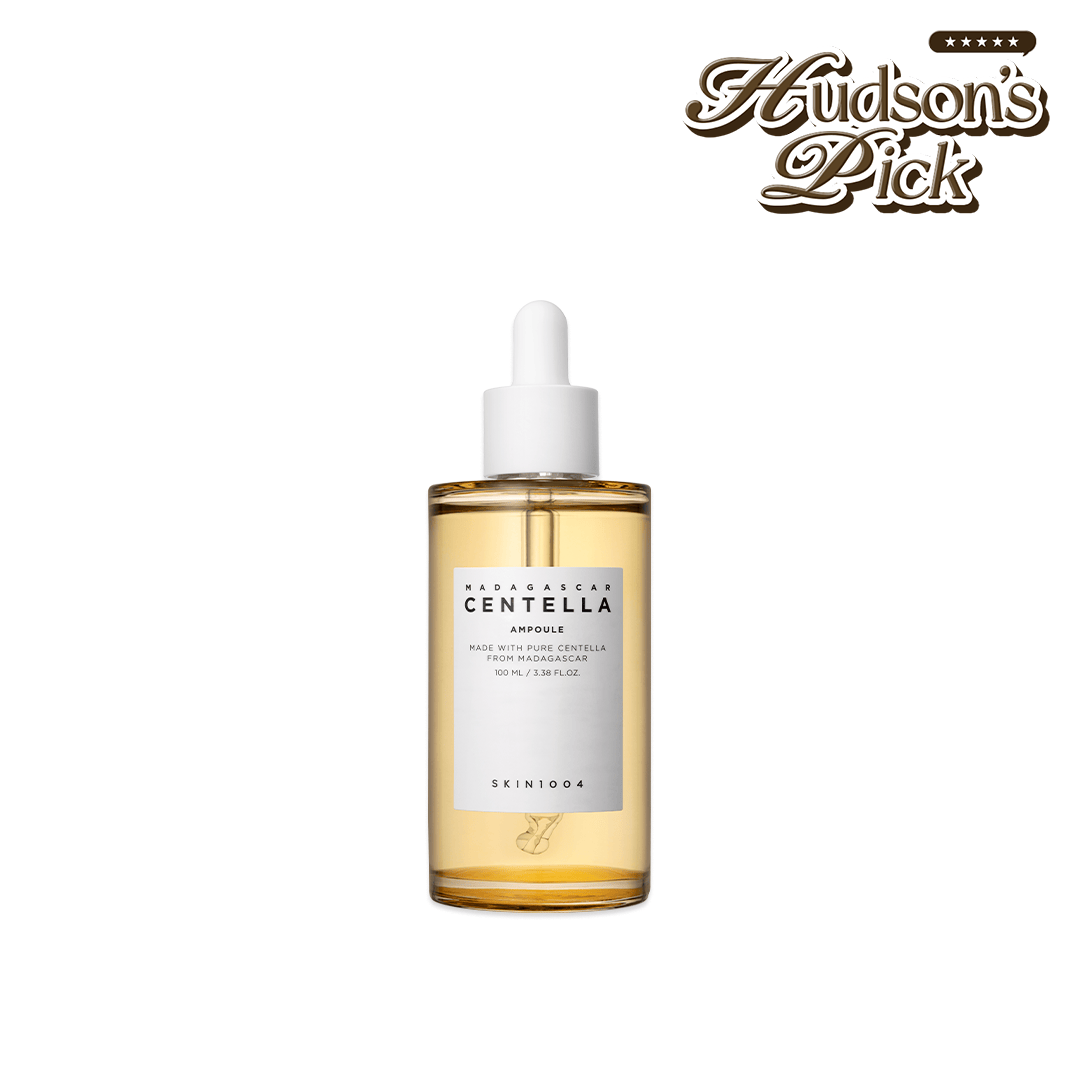
Some evenings, skin asks for a pause more than it asks for another active.
That feeling has a measurable side. In a cross-sectional study of Thai volunteers indexed on PubMed, researchers found higher transepidermal water loss (TEWL), the standard measure of how much water escapes through the skin, in people with acne than in controls, and the highest TEWL in people who were already using acne medication. Dermatology Times reported the study's mean TEWL as 13.16 g/m²/h in the acne group versus 10.63 in controls. The authors concluded that acne treatment further impaired the barrier.
What the barrier research does and does not settle
The findings are not uniform. A comparison of papulopustular rosacea and acne published in PMC measured lower TEWL in acne patients than in healthy subjects and judged their barrier unimpaired. An older study of 36 acne patients and 29 controls on PubMed linked acne to lower amounts of ceramides in the outer skin layer and weaker water barrier function.
The more consistent finding concerns treatment. The American Academy of Dermatology (AAD) lists benzoyl peroxide, salicylic acid, adapalene, tazarotene, tretinoin and isotretinoin as treatments that tend to dry and irritate skin, and says a daily moisturizer can help skin tolerate them. A Delphi consensus panel of 11 Canadian dermatologists, published in PMC, agreed that dryness and irritation are a very important reason people stop acne treatment, and proposed moisturizers, particularly ceramide-containing ones, as adjunctive care.
So for most readers, "barrier repair" means keeping skin comfortable enough to keep treating acne. A serum can help with the water side of that job. The lipid side belongs to the moisturizer.
Five criteria for a barrier serum on acne-prone skin
We use these criteria in order. The first one carries the most weight, because a serum that clogs pores undoes the reason you are treating the skin in the first place.
| Criterion | Why it matters | How to check | Centella Ampoule |
|---|---|---|---|
| Pore-clogging evidence | Acne-prone skin needs layers that are unlikely to cause comedones | "Non-comedogenic", "oil-free" or "won't clog pores" on the label, as the AAD advises; ask whether a human-use test stands behind it | Completed a human-use non-comedogenic test in 2020. The claim is printed on the Korean pack and is absent from US/CA and EU/UK packs |
| Water-binding humectants | Treated skin loses more water | Glycerin or similar humectants high in the ingredient list | Official ingredient list includes Glycerin and Butylene Glycol. Contains no sodium hyaluronate |
| Light, layerable texture | It has to sit under a moisturizer and a treatment without heaviness | Watery or gel texture. The AAD notes gels are lighter for oily skin | Absorbs without stickiness |
| Lipid replacement | A dermatologist panel proposed ceramide-containing moisturizers as adjunctive acne care | Ceramides, cholesterol or fatty acids, usually in a cream | Does not meet this. It contains no ceramides, so pair it with a moisturizer |
| No drying extras | Irritation can feed more breakouts | Skip astringents and rubbing alcohol, as the AAD recommends; check the full ingredient list on your market's pack | Built around Centella Asiatica Extract; confirm the full list on your pack before buying |
On this scorecard, our ampoule fits the hydrating, layerable serum role and needs a partner for lipids. We would rather you know that before you buy than discover it after starting a retinoid.
Where the serum goes around acne treatments
Your prescriber's instructions come first. The AAD says dermatologists may reduce retinoid irritation by having you apply a smaller amount, use the retinoid less often, or apply moisturizer first. The AAD also advises applying a moisturizer for acne-prone skin twice a day after washing, and using treatments as directed (AAD).
Within those rules, here is the order we suggest:
- Cleanse gently, rinse with lukewarm water and pat dry.
- Hydrating serum on the whole face, a few drops pressed in.
- Moisturizer for lipids. On treatment nights, ask your dermatologist whether yours should go before or after a retinoid.
- Acne treatment exactly as prescribed or as the label directs.
- Morning only: sunscreen. The AAD recommends a broad-spectrum, water-resistant SPF 30 or higher.
The serum step is optional on mornings when your skin already feels comfortable. On evenings when it stings or feels tight, keep it in.
Reading a non-comedogenic claim, including ours
Start with the label wording. The AAD describes "oil-free", "non-comedogenic" and "won't clog pores" as signs that a moisturizer is unlikely to cause acne. That standard is reasonable, and it still leaves room for individual reactions.
Our Centella Ampoule's claim rests on a human-use test run in 2020. Trained evaluators graded comedones on standardized facial photographs before and after a period of twice-daily use, and found no statistically significant increase. We also want to be clear about scope. The volunteers were adults whose skin was prone to comedones but who had no active blemishes at the test site, and the study was not designed to evaluate people using acne medication. It shows the ampoule did not raise comedone grades in that group. It cannot predict how one person's actively treated skin will respond.
For a deeper look at how these tests work, read What Makes an Ampoule Truly Non-Comedogenic?.
What Centella can and cannot claim
Centella asiatica contains triterpenes such as asiaticoside and madecassoside. A review in PMC describes effects on acne, wounds and atopic dermatitis in cell and animal studies, and notes that rigorously controlled long-term clinical trials are still needed.
That is why we position the Centella Ampoule as a soothing, hydrating step. It is an all-rounder ampoule formulated to help soothe visible redness and comfort sensitive-looking skin, suitable for all skin types and especially dry and delicate skin. It does not treat acne, and it does not stand in for the ceramide cream or prescription your plan may need.

Centella Ampoule - 100ml
19.80
Shop now
Signs the problem is bigger than your serum
If skin cracks, bleeds, or stings painfully despite moisturizing, the AAD advises seeing a dermatologist. The same applies if breakouts worsen after you add any new layer. Our broader guide, Best Serums for a Damaged Skin Barrier: How to Choose, covers barrier care beyond acne routines.
FAQ
Do I need hyaluronic acid for barrier care?
No single humectant is required. Glycerin also binds water in the outer skin layer. Our Centella Ampoule relies on glycerin and butylene glycol and contains no sodium hyaluronate. If you specifically want hyaluronic acid, our hyaluronic acid product comparison explains which SKIN1004 formulas include it.
Should I pause my acne treatment until my skin recovers?
Talk to whoever prescribed it before stopping. The AAD notes that irritation from a retinoid typically does not mean an allergy, that a retinoid may still be a treatment option, and that a dermatologist may adjust how much or how often you apply it.
Why doesn't the US bottle say "non-comedogenic"?
Packaging text differs by market. The test was completed on the Centella Ampoule, and the claim appears on the Korean pack only, so the US/CA and EU/UK packs carry no statement either way.
How long before I can tell whether a serum suits my treated skin?
Introduce one new product at a time so you can tell which layer is responsible for any change. If irritation or new breakouts appear, stop the new product and check with your dermatologist.
Find your calm layer
If your acne routine needs a light, glycerin-based hydrating step with human-use non-comedogenic testing behind it, explore the Centella Ampoule, then pair it with the moisturizer your skin already tolerates.