
Azelaic Acid: How to Use It, Results Timeline and Purging
How to use azelaic acid: where it goes in your routine, how often to apply it, what to pair it with, how long results take, and purging vs side effects.
Updated October 2026
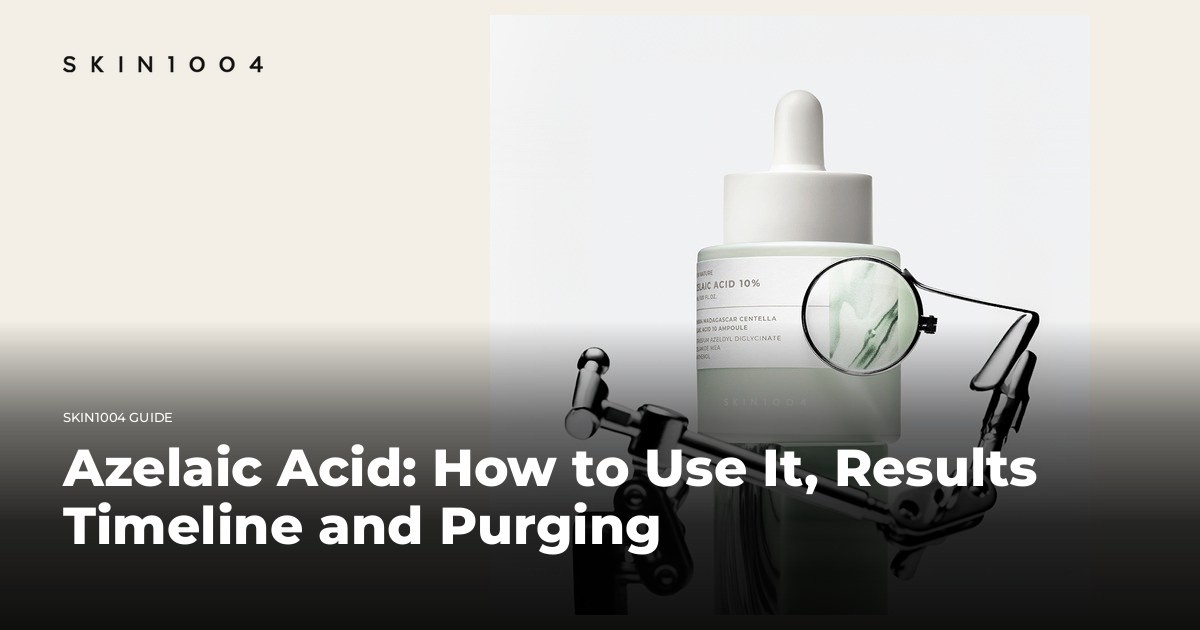
The SKIN1004 Azelaic Acid 10 Ampoule, USD 20.40 for 30ml, pairs 10.2% azelaic acid with two azelaic derivatives in a formula with no fragrance, essential oils or ethanol. In a human application test with 21 participants, skin redness improved by 24.95% immediately after one use, and after 4 weeks the inflammatory acne lesion count changed by 25.58% and sebum secretion improved by 53.98%. Oily and blemish-prone skin gets oil and breakout care, red and reactive skin gets calming, and skin with post-acne marks gets a steady fade.
Azelaic acid is one of the few skincare actives that treats breakouts, redness and dark marks at the same time, and it is gentle enough for most skin types. Getting results from it depends less on which bottle you buy than on how you use it: where it sits in the routine, how often you apply it, what you pair it with and how long you give it. This guide covers each of those steps, what to expect week by week, and how to tell a normal adjustment from a reaction.
What azelaic acid is and what it treats
Azelaic acid is a dicarboxylic acid found naturally in grains such as wheat, barley and rye, and produced by yeast that lives on the skin. In skincare it is made in the lab for purity. It works on three problems at once. It reduces the bacteria involved in acne and helps keep pores from clogging, which is why it treats both inflamed and non-inflamed breakouts. It calms the inflammation behind redness, which makes it a common choice for rosacea-prone skin. And it slows tyrosinase, the enzyme that makes pigment, so marks left by breakouts and uneven patches fade over time.
Azelaic acid comes in two strength ranges. Over-the-counter products usually sit around 10%, and prescription creams and gels contain 15% or 20%. The lower range suits daily use on most skin and is where most people start; higher prescription strengths are used under a doctor's guidance for rosacea and acne. A full guide to choosing a strength for reactive skin is in Azelaic Acid for Sensitive Skin: A Complete Guide.
How to use azelaic acid, step by step
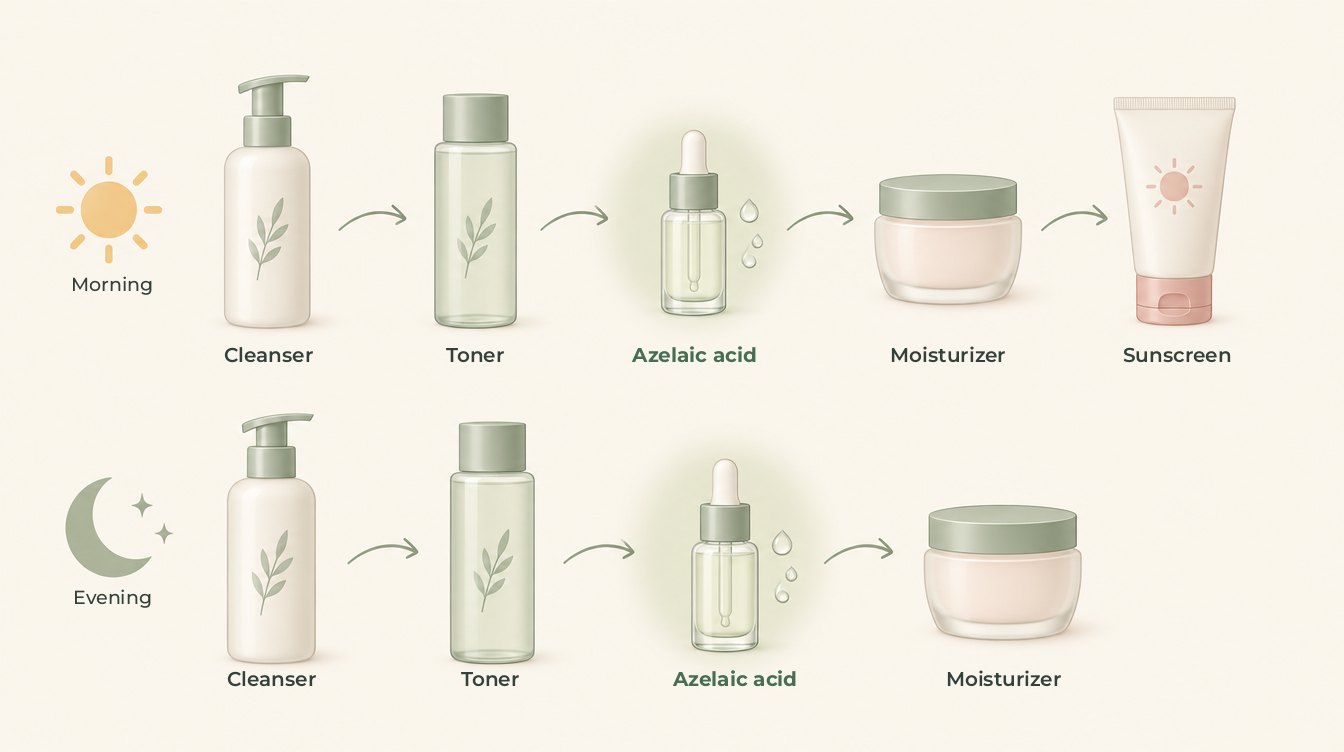
Azelaic acid goes on clean skin, after water-thin steps and before creams, so it reaches the skin before heavier layers slow it down.
- Cleanse with a gentle cleanser and pat skin dry. Damp skin can increase tingling with acids, so wait a minute.
- Apply toner if you use one, and let it absorb.
- Apply azelaic acid: two or three drops of an ampoule or a pea-sized amount of a cream or gel for the whole face. Spread it in a thin layer over the areas you want to treat, avoiding the eye area and the corners of the nose and mouth.
- Wait about a minute, then apply moisturizer.
- In the morning, finish with sunscreen.
How often to apply it
Start once a day, every other day, for the first one to two weeks. If your skin feels comfortable, move to once daily, then to twice daily if your product is designed for it and your skin tolerates it. Most people do well with once or twice daily use long term. Consistency matters more than frequency: azelaic acid works by repeated contact, so daily use over months gives better results than heavy use for a few weeks.
Morning or night
Azelaic acid does not make skin more sensitive to the sun, so it can be used morning or night. Use it at night if your morning routine is already busy with vitamin C, or in the morning if your evening routine includes a retinoid. Sunscreen still matters, because UV darkens the marks azelaic acid is fading.
What to pair with azelaic acid and what to keep apart
Azelaic acid is one of the easiest actives to combine. It works at a mild pH, does not break down other ingredients, and calms the irritation stronger actives cause.
Niacinamide is the most common partner: niacinamide strengthens the barrier and reduces oil, and azelaic acid treats breakouts and marks, so the two cover each other's gaps. How they divide the work is covered in Azelaic Acid vs Niacinamide for Redness and Dark Spots.
Retinoids pair well too, with spacing. Use the retinoid at night and azelaic acid in the morning, or use them on alternate nights at first. Together they treat clogged pores, breakouts and marks from different angles.
Vitamin C, exfoliating acids such as glycolic or salicylic acid, and benzoyl peroxide can be combined, but each adds dryness. Introduce one at a time, keep them in different parts of the day, and drop back if skin stings.
Hydrating and calming ingredients such as panthenol, centella and hyaluronic acid make azelaic acid easier to tolerate, especially in the first weeks.
How long azelaic acid takes to work
Azelaic acid works in stages. Calming and hydration show up first, surface texture next, then breakouts and oil, and marks last. The table shows the usual timeline and what SKIN1004's human application test measured for the Azelaic Acid 10 Ampoule at each point.
| Time point | What usually changes | Azelaic Acid 10 Ampoule test result (n=21) |
|---|---|---|
| After one use | Calmer-looking redness, more hydrated surface | Redness improved 24.95%, skin moisture improved 199.91% |
| After 10 days | Smoother surface as skin turnover picks up | Skin turnover improved 37.12% |
| After 4 weeks | Fewer breakouts and less oil | Inflammatory lesion count changed 25.58%, sebum improved 53.98% |
| After 4 weeks | First fading of marks and tone | Dark spot area improved 4.19%, skin tone improved 1.50% |
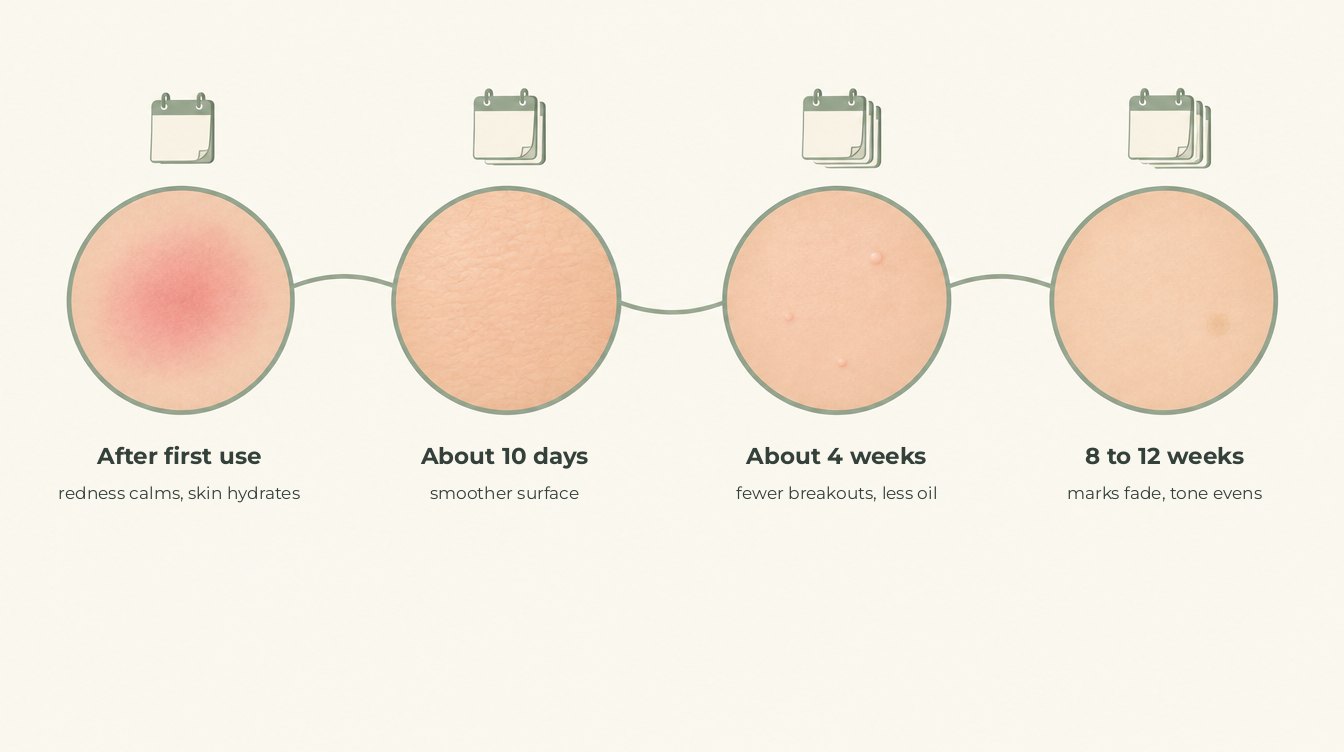
Marks keep fading well beyond the first month. Post-acne marks and uneven patches usually need 8 to 12 weeks of consistent use to change visibly, because pigment already in the skin has to shed with the surface layers; azelaic acid prevents new pigment while the old pigment works its way out. Redness in rosacea-prone skin often improves within the first month, and breakouts continue to settle over the following two months.
Azelaic acid before and after: tracking your own results
Because the changes are gradual, the most reliable way to see them is to photograph your skin. Take a photo before you start, then every two weeks, in the same spot, with the same light and no makeup. Compare week 0 with week 4 for breakouts and redness, and week 0 with week 12 for marks. Day-to-day changes are too small to judge in a mirror.
Purging, side effects and how to tell them apart
Mild tingling, itching or warmth for a few minutes after application is the most common reaction in the first weeks, and it usually fades as skin adjusts. Some people also notice slight dryness or flaking around the nose and mouth. Applying moisturizer after the azelaic acid layer, and reducing to every other day, helps with both.
Does azelaic acid cause purging?
Purging is a short-term increase in breakouts when an active speeds up skin turnover and pushes existing clogs to the surface. Azelaic acid has a mild effect on turnover, so some people see a brief flare of small breakouts in the first two to four weeks, in the areas where they usually break out. That pattern, short-lived and in familiar spots, is purging. Breakouts in new areas, a rash, swelling or burning that does not fade are signs of irritation, and the product should be paused.
When to stop and get advice
Stop using azelaic acid and see a dermatologist if burning lasts more than a few minutes, if skin turns red and swollen, or if a rash appears. If you are treating rosacea or acne that is severe or getting worse, a dermatologist can decide whether a prescription strength suits you. Patch test any new product along the jawline for a few days before using it on the whole face.
Choosing an azelaic acid product: where the Azelaic Acid 10 Ampoule fits
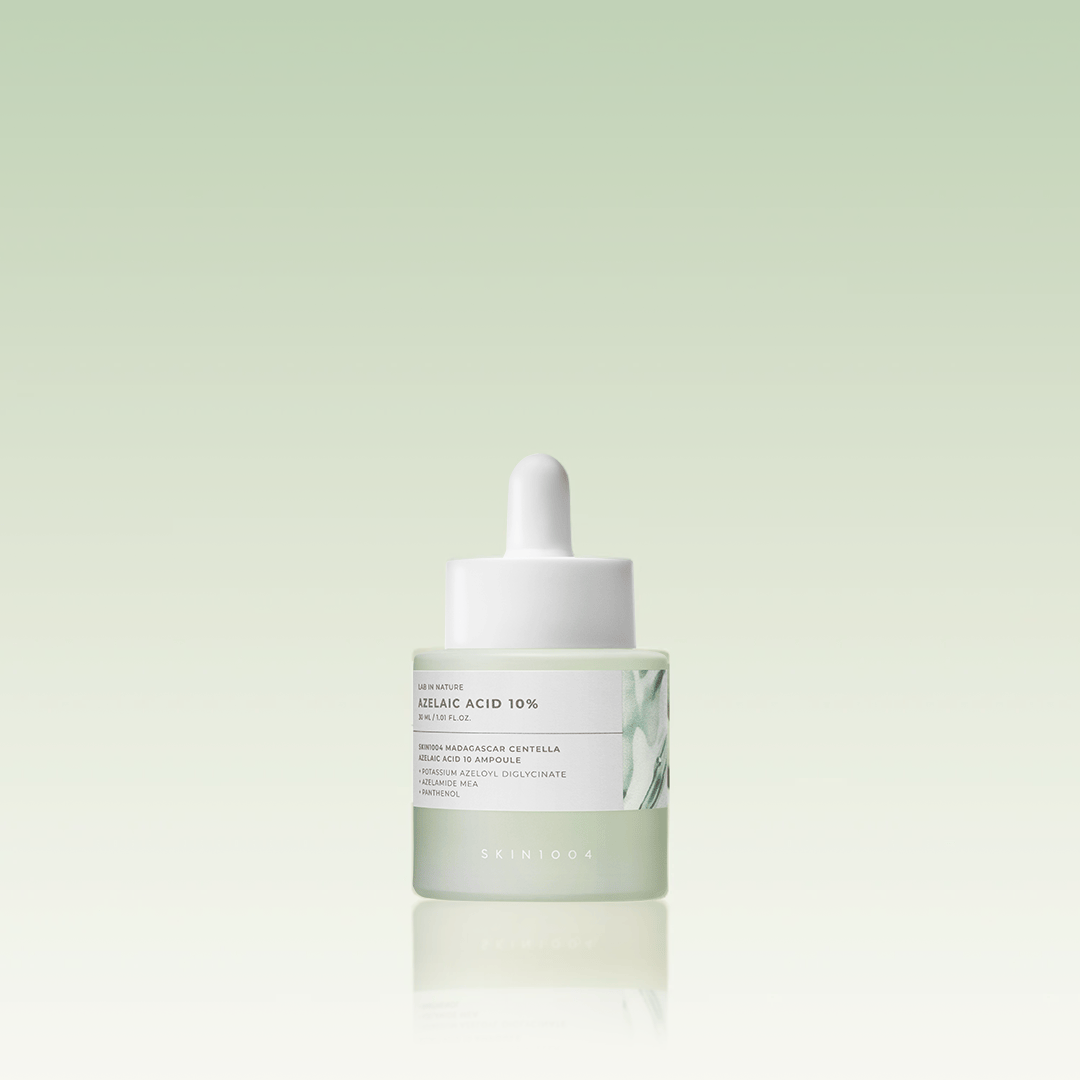
SKIN1004 formulated the Azelaic Acid 10 Ampoule for daily use. It contains azelaic acid at 10.2% plus two derivatives, potassium azeloyl diglycinate and azelamide MEA, at 1.5%, alongside panthenol, sodium hyaluronate, licorice root extract and centella asiatica extract. It has no fragrance, essential oils or ethanol, and it has completed a sensitive skin irritation test and a 24-hour primary skin irritation patch test.
How it fits depends on your concern. If your concern is breakouts and oil, it fits because after 4 weeks the inflammatory acne lesion count changed by 25.58% and sebum secretion improved by 53.98% in the human application test; a closer look at oily skin is in Does SKIN1004 Azelaic Acid 10 Ampoule Help Oily Skin?. If your concern is redness, it fits because redness improved by 24.95% immediately after one use, with panthenol and centella in the formula to keep skin comfortable through the first weeks; for rosacea-prone skin, see Azelaic Acid Serum for Rosacea and What It Does for Skin. If your concern is post-acne marks, it fits because dark spot area improved by 4.19% after 4 weeks, the start of a fade that continues with daily use. If you are new to azelaic acid, it fits because the ampoule texture spreads thin, absorbs fast and layers under any moisturizer.
Azelaic Acid 10 Ampoule
21.6 USD
Shop now
The Azelaic Acid 10 Ampoule comes in 30ml and 9ml. The 9ml size covers a trial of the first weeks, and the 30ml bottle covers the two to three months that marks need.
So if you want an azelaic acid you can use every day from the first week, the Azelaic Acid 10 Ampoule is made for that routine. It pairs 10.2% azelaic acid with two derivatives and calming ingredients, measured a 24.95% improvement in redness after one use and a 53.98% improvement in sebum after 4 weeks, and the 30ml bottle at USD 20.40 lasts through the months of steady use that azelaic acid rewards.
FAQ
How long until azelaic acid results?
Redness and hydration improve from the first use, breakouts and oil over about 4 weeks, and marks over 8 to 12 weeks of daily use.
Can I use azelaic acid every day?
Yes. Start every other day for one to two weeks, then use it once or twice daily. Most people use it long term.
Do I apply azelaic acid before or after moisturizer?
Before. Apply it to clean, dry skin after toner, wait about a minute, then apply moisturizer on top.
Can azelaic acid cause purging?
It can cause a brief flare of small breakouts in your usual areas during the first two to four weeks. Breakouts in new areas, burning or a rash point to irritation instead.
What should you not mix with azelaic acid?
Nothing is strictly off limits, but avoid stacking several drying actives, such as exfoliating acids, benzoyl peroxide and retinoids, in the same routine at the start. Introduce them one at a time and in different parts of the day.