
Azelaic Acid for Redness, Dark Spots and Oily Skin
Azelaic acid vs niacinamide for redness, dark spots and oily skin: what each targets, how to choose by skin type, and 4-week results from a 10% ampoule.
Updated October 2026
SKIN1004's Azelaic Acid 10 Ampoule is our answer to azelaic acid vs niacinamide for redness, dark spots and oily skin: 10.2% azelaic acid plus 1.5% derivatives work on all three in one step. Use azelaic acid when redness and breakouts lead, and keep niacinamide as a gentle tone and oil helper.
Both ingredients get asked about for the same three concerns, and both can live in one routine. The difference is reach. Azelaic acid touches redness, discoloration, turnover and oil at once, while niacinamide is usually chosen as a supporting layer. We're the SKIN1004 guide team, and below we lay out what each ingredient targets, how to choose by skin type and what our ampoule measured in human application tests.
What each ingredient targets
Niacinamide is a form of vitamin B3 known mainly for calming visible redness, evening out tone over time and helping skin look less oily. It is a long-standing everyday ingredient and works well as a supporting step in toners and light serums.
Azelaic acid covers that same territory and adds more. It has a long history in dermatology for rosacea-related redness, it works on post-acne marks and uneven tone, and its mild keratolytic action helps skin renew and keeps pores clearer. That last part matters for oily, breakout-prone skin, because turnover and oil control go hand in hand with fewer clogged pores.
Redness
For redness, azelaic acid is the stronger pick when the redness comes with bumps or flushing. Niacinamide suits mild, everyday redness that mostly needs calming. Our guide on Azelaic Acid Serum for Rosacea and What It Does for Skin goes deeper into the redness mechanism.
Dark spots
For dark spots and post-acne marks, both ingredients help even out tone over several weeks. Azelaic acid adds turnover support, so marks and the texture around them improve together.
Oily skin
For oily skin, azelaic acid works on sebum, turnover and breakouts in one step. Niacinamide is a useful light layer for shine that has no breakouts attached.
The practical implication is simple. If your skin shows two or three of these concerns at once, one azelaic acid step can cover them together, which keeps the routine short and lowers the chance of irritation from stacking many actives. If your skin mainly needs a light daily calming layer, niacinamide alone may be enough, and azelaic acid can join later when marks or breakouts show up.
Azelaic acid vs niacinamide at a glance
The table sums up how the two ingredients compare on the three concerns in the question.
| Ingredient | Redness | Dark spots | Oily skin |
|---|---|---|---|
| Azelaic acid | Redness with bumps or flushing | Post-acne marks and uneven tone, with turnover support | Sebum, turnover and breakouts together |
| Niacinamide | Mild everyday redness | Gradual tone evening | Shine on skin that rarely breaks out |
What the Azelaic Acid 10 Ampoule measured
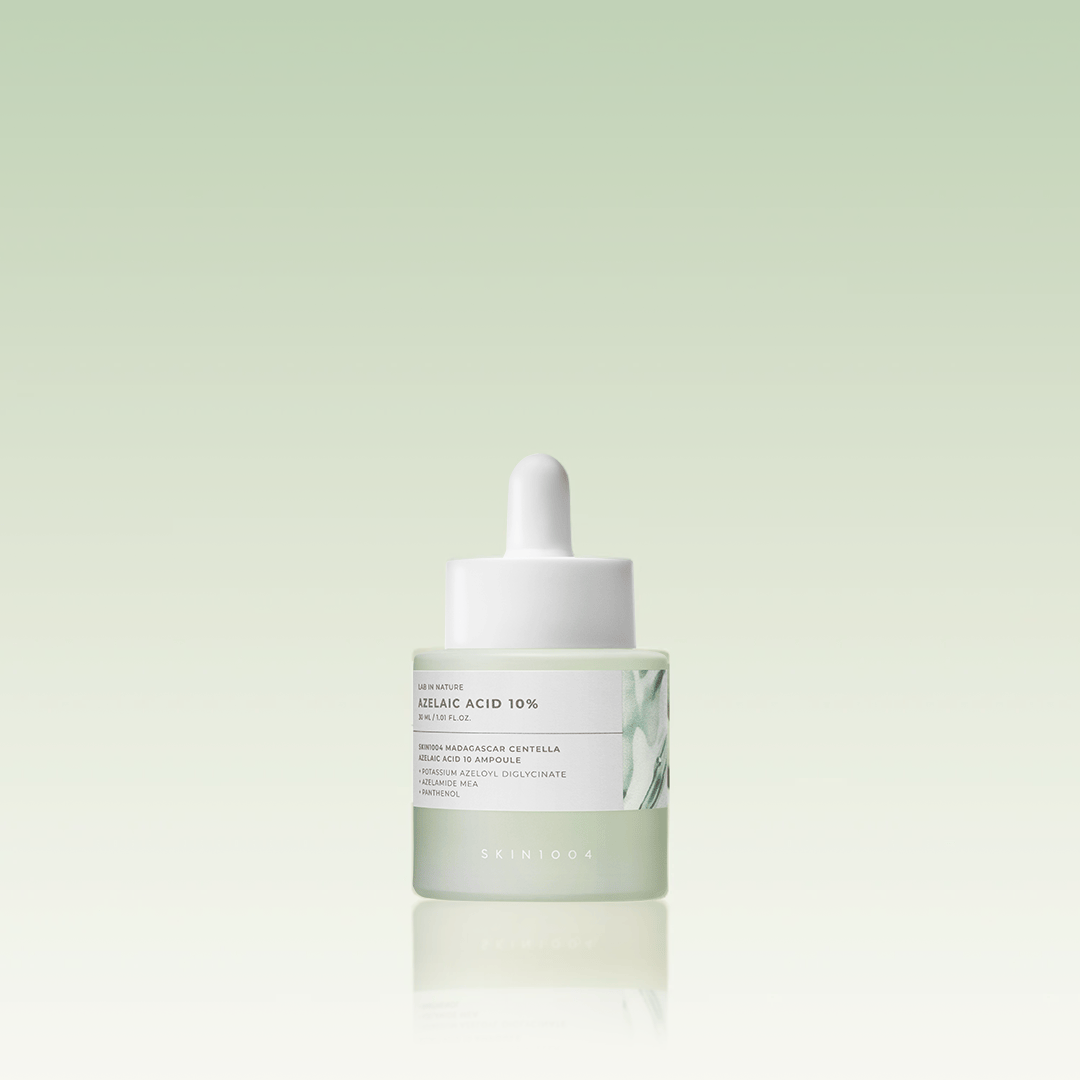
The Azelaic Acid 10 Ampoule is USD 20.40 for 30ml and also comes in a 9ml size. SKIN1004 tested it in human application tests on 21 subjects, and the results map directly onto redness, dark spots and oily skin.
Azelaic Acid 10 Ampoule
21.6 USD
Shop now
For redness, skin redness in the test area improved by 24.95% immediately after a single use. For dark spots, dark spot area improved by 4.19% after 4 weeks as measured by VISIA-CA imaging, and skin tone improved by 1.50% over the same 4 weeks. For oily, breakout-prone skin, sebum secretion improved by 53.98% after 4 weeks, the inflammatory acne lesion count changed by 25.58% and the non-inflammatory lesion count changed by 13.02%. Skin turnover in the applied area improved by 37.12% after 10 days.
Moisture matters too, since actives can leave oily skin tight. Skin moisture improved by 199.91% after a single use in the same test series. The ampoule has also completed a sensitive skin irritation test and a primary skin irritation test with a 24 hour patch.
The formula behind the results
SKIN1004 built the ampoule around three azelaic actives: azelaic acid at 10.2%, plus potassium azeloyl diglycinate and azelamide MEA as derivatives at 1.5%. The derivatives are water friendly forms that keep the texture watery and light.
Around those actives, the 27 ingredient list adds comfort and moisture: panthenol, allantoin, centella asiatica extract, beta-glucan, biosaccharide gum-1, sodium hyaluronate and licorice root extract, with glycerin and butylene glycol further down for hydration. That support is why the active step feels balanced on skin. The full ingredient breakdown and sizing are on the Madagascar Centella Azelaic Acid 10 Ampoule product page.
How to choose by skin type
Oily and acne-prone skin gets the most from azelaic acid, because the sebum, lesion and turnover results all point at that skin type. Combination skin can use the ampoule across the face and keep a niacinamide toner as a light first layer. Sensitive skin can start azelaic acid every other night for 2 weeks and move to nightly use once skin stays comfortable. How a 10% strength works on reactive skin is covered in Azelaic Acid Serum for Sensitive Skin: How 10% Fits In.
Using both in one routine
Azelaic acid and niacinamide can share a routine. Niacinamide usually lives in a toner or light layer, while the ampoule is the concentrated step after toner and before moisturizer. Apply two to three drops of the ampoule, pat it in, then seal with your moisturizer. Finish with sunscreen in the morning to protect the dark spot progress.
Where the ampoule goes in a full layering order is explained in Ampoule Step in a K-Beauty Routine: Layering Azelaic Acid. The simplest version for busy days is toner, the Azelaic Acid 10 Ampoule, moisturizer and sunscreen.
FAQ
Is azelaic acid or niacinamide better for redness?
Azelaic acid is the stronger choice when redness comes with bumps or flushing. In testing on 21 subjects, the Azelaic Acid 10 Ampoule improved skin redness by 24.95% immediately after one use.
Which is better for dark spots?
Both help tone over several weeks. Azelaic acid adds turnover support, and the ampoule improved dark spot area by 4.19% after 4 weeks.
Can I use azelaic acid and niacinamide together?
Yes. Use niacinamide in a toner or light layer, then apply the azelaic acid ampoule before moisturizer. Start the ampoule every other night if your skin is sensitive.
Which suits oily skin?
Azelaic acid works on sebum, turnover and breakouts together. The ampoule improved sebum secretion by 53.98% after 4 weeks of use.