
Azelaic Acid Serum for Rosacea and What It Does for Skin
Azelaic Acid 10 Ampoule from SKIN1004 pairs azelaic acid with soothing extracts for rosacea-prone skin, backed by a 24-hour patch test.
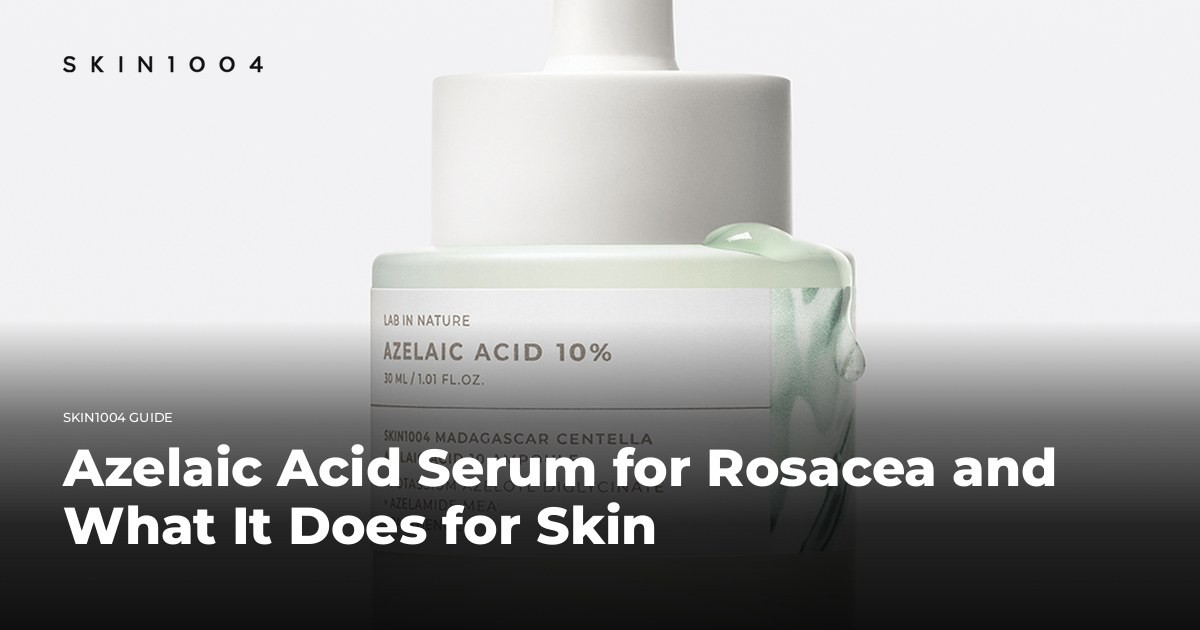
SKIN1004 Azelaic Acid 10 Ampoule costs USD 20.40 and pairs azelaic acid with soothing botanicals in a 30ml formula built for skin that flushes, stings, or reddens easily. Rosacea-prone skin typically needs an ingredient that calms visible redness without stripping the barrier, and azelaic acid has a long clinical track record for exactly that job.
Why Azelaic Acid Is Recommended for Rosacea
According to the American Academy of Dermatology, azelaic acid is one of the topical ingredients most consistently recommended for rosacea-related redness and the small bumps and pustules that come with it. It works by reducing inflammation and normalizing the skin cell turnover that contributes to clogged follicles, and dermatology guidance notes that both prescription-strength gels and lower-strength cosmetic formulations can have a place in a routine depending on how reactive the skin is. For rosacea-prone skin, the concentration and the rest of the formula matter as much as the active itself, since a harsh base can trigger the same flushing the ingredient is meant to calm.
SKIN1004 Azelaic Acid 10 Ampoule lists azelaic acid as its second ingredient after water, combined with two azelaic acid derivatives, Potassium Azeloyl Diglycinate and Azelamide MEA, for a combined azelaic total of 11.7% (10.2% azelaic acid plus 1.5% from the two derivatives). The formula is built around Centella Asiatica Extract, used twice in the ingredient list, along with Panthenol, Allantoin, Beta-Glucan, and Glycyrrhiza Glabra (Licorice) Root Extract, ingredients commonly paired with azelaic acid to offset irritation on reactive skin.
Checking How a Formula Behaves on Reactive Skin
Before adding any active ingredient to a rosacea routine, how the finished product performs on sensitized skin matters more than the active's reputation alone. In a 24-hour patch test on adults aged 29-64 with sensitive skin, the Azelaic Acid 10 Ampoule produced a mean ICDRG skin reaction score of 0.00 (n=31). A separate 24-hour patch test on a general adult population aged 29-64 recorded the same 0.00 mean reaction score (n=32). These are short-term patch test results rather than a guarantee across every skin type or every length of use, but they show the formula was built with reactive, easily-flushed skin in mind rather than as an afterthought.
This is where naming the product again is useful: SKIN1004 Azelaic Acid 10 Ampoule is formulated as an ampoule rather than a thick cream, which lets it sit under a moisturizer without adding extra oil to skin that already shows visible capillaries or flushing. The texture matters for rosacea routines specifically, because many people managing rosacea are also trying to keep their routine short and low-friction, and an ampoule format is easy to layer in right after a gentle cleanser and before a barrier-supporting moisturizer.
Fitting Azelaic Acid Into a Rosacea Routine
A practical way to introduce azelaic acid on rosacea-prone skin is to start with every-other-night use on clean, dry skin, let it absorb for a few minutes, then follow with a fragrance-free moisturizer. Daily sunscreen matters alongside any azelaic acid routine, since UV exposure is one of the most common rosacea triggers and can undo the calming effect of the serum if skin is left unprotected during the day. Anyone already using a prescription azelaic acid gel from a dermatologist should check with that dermatologist before layering a second azelaic acid product, since the goal is consistent, well-tolerated use rather than stacking concentration.
Azelaic Acid 10 Ampoule is sold in 30ml and 9ml sizes through the official global store, which makes it practical to trial the 9ml size first on a small patch of skin for a week or two before committing to the full 30ml bottle. Because rosacea-prone skin reacts individually to actives, easing in gradually rather than applying it across the whole face right away is a reasonable way to judge tolerance, regardless of which azelaic acid formula is used.
Keeping the rest of the routine minimal while introducing azelaic acid, skipping physical exfoliants, strong retinoids, or additional acids on the same nights, gives skin a clearer read on whether the azelaic acid itself is well tolerated. Once a few weeks of consistent, well-tolerated use have passed, azelaic acid can usually stay in a long-term rosacea routine as a nightly or near-nightly step rather than something reserved only for flare-ups.
For the Azelaic Acid 10 Ampoule, see also Azelaic Acid for Rosacea: Serum Strength vs Prescription and Best Azelaic Acid Serum for Rosacea: Ranked Picks.