
Azelaic Acid Serum for Sensitive Skin: How 10% Fits In
An azelaic acid serum for sensitive skin needs a tolerable strength, soothing company in the formula and a slow start. SKIN1004 Azelaic Acid 10 Ampoule, USD 20.40 for 30ml.
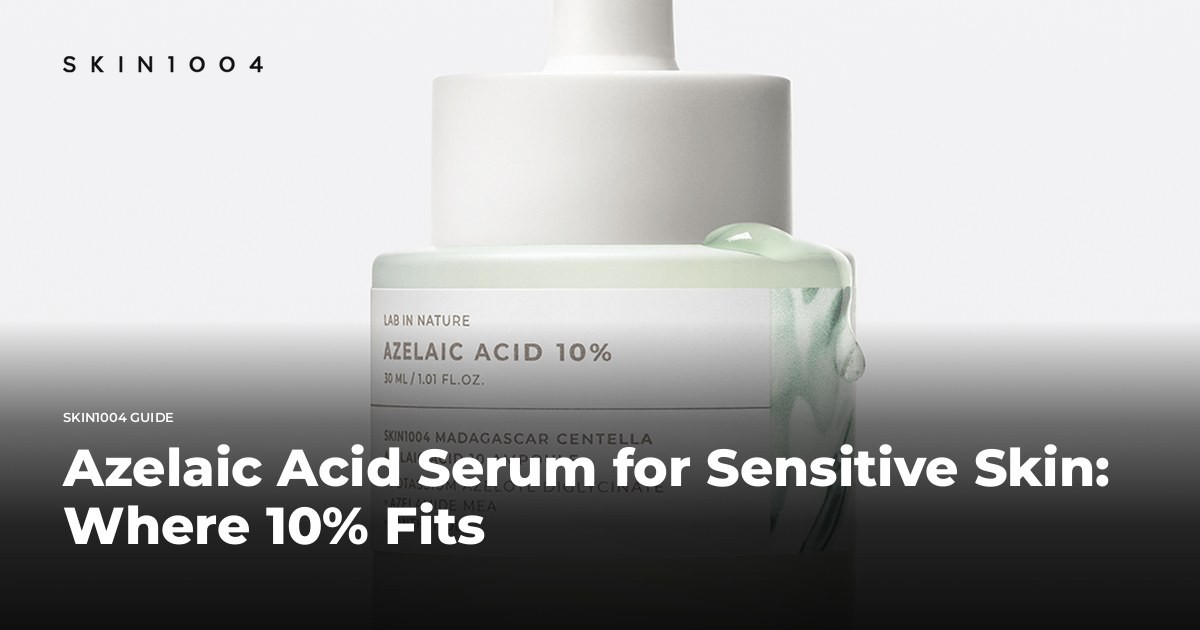
SKIN1004 Azelaic Acid 10 Ampoule costs USD 20.40 for 30ml and pairs 10% azelaic acid with two azelaic derivatives, potassium azeloyl diglycinate and azelamide MEA, in a 27-ingredient formula that also lists panthenol, allantoin, Centella Asiatica Extract, sodium hyaluronate and beta-glucan. For sensitive skin that gets both redness and breakouts, azelaic acid is one of the few actives that addresses both at once, and the whole question is how to use it without setting the skin off.
Why azelaic acid suits sensitive skin, and what to look for in the serum
According to the American Academy of Dermatology, azelaic acid is among the ingredients used for rosacea and for acne, which is why it keeps coming up for skin that is reactive and blemish-prone at the same time. It is gentler in practice than most exfoliating acids, which is why it is usually the first acid tried on reactive skin. The first weeks can bring a light tingle or itch on application that settles as the skin adjusts; that is the normal course for most people and is different from a burning that persists.
Three things decide whether an azelaic acid serum works for sensitive skin:
- strength: cosmetic serums sit at 10%, well under prescription strengths, which is where most sensitive skin should start
- company: panthenol, allantoin, centella and humectants in the same bottle offset the tingle and keep the barrier comfortable
- texture: a water-based ampoule spreads thin and absorbs, so a small amount covers the face without a heavy layer sitting on reactive skin
Fragrance, denatured alcohol and essential oils have no place in a serum meant for sensitive skin, and neither does a second exfoliating acid in the same step.
SKIN1004 Azelaic Acid 10 Ampoule for sensitive, blemish-prone skin
SKIN1004 Azelaic Acid 10 Ampoule lists azelaic acid second on its ingredient list, right after water, with hydroxypropyl cyclodextrin to keep the acid dissolved in a water base and the two derivatives, potassium azeloyl diglycinate and azelamide MEA, adding to the azelaic family. Around them sit the soothing and hydrating ingredients that sensitive skin needs in the same bottle: panthenol, allantoin, Centella Asiatica Extract and Centella Asiatica Leaf Extract, sodium hyaluronate, beta-glucan, glycerin, butylene glycol and licorice root extract. It is fragrance-free. A sensitive-skin irritation test and a primary skin irritation test were completed on it, which is the kind of record a reactive-skin buyer should expect from an acid serum. The global store sells it in 30ml at USD 20.40 and in a 9ml size for a first trial.
Starting azelaic acid on sensitive skin without a flare
The slow start is the whole method. Patch test on the jawline for three evenings. Then use the ampoule every other evening for the first two weeks, a few drops pressed over clean, dry skin, followed by a plain moisturizer; if the skin stays comfortable, move to every evening, and only then consider mornings under sunscreen. Keep retinoids, vitamin C and other acids out of the routine while azelaic acid is being introduced, and bring them back one at a time afterwards. Sunscreen every morning is part of the routine, since both redness and post-blemish marks worsen with UV. On the days the skin feels reactive, skip the ampoule and keep only the moisturizer; a day off costs nothing, and the results from azelaic acid come over weeks, not days. The full ingredient list and both sizes are on the Azelaic Acid 10 Ampoule page.
For the Azelaic Acid 10 Ampoule, see also Azelaic Acid for Sensitive Skin: A Complete Guide and Best Korean Azelaic Acid Serum for Sensitive Skin (2026).