
Azelaic Acid for Sensitive Skin: A Complete Guide
For reactive skin, the most useful azelaic acid is the lowest strength you can apply consistently without stinging, in a plain vehicle, once daily before you try twice. Almost all of the clinical research sits at prescription strengths of 15% and 20%, while over-the-counter formulas in most markets stop at 10%, so a result measured at 15% cannot be read across to a 10% cosmetic serum. This guide walks through the mechanism, what the guidelines and trials actually establish at each strength, how to judge a formula, and a four-week way to trial one.
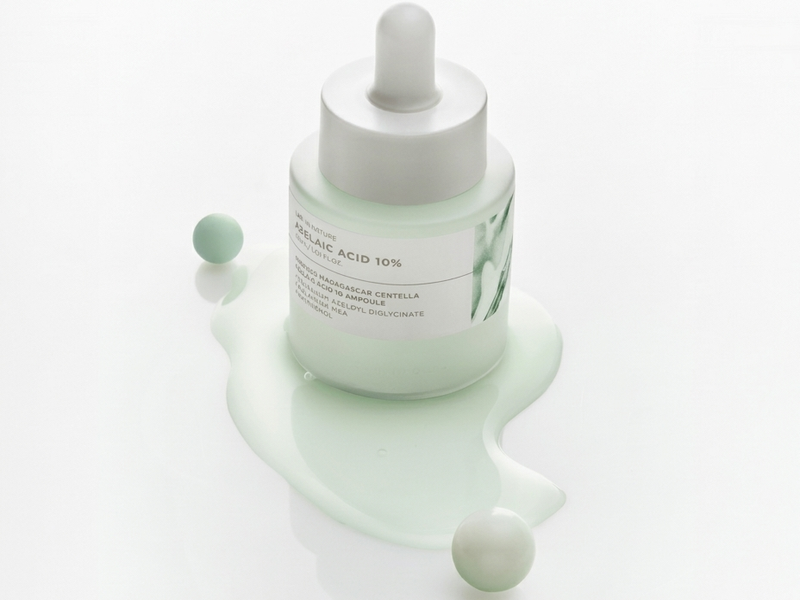
SKIN1004 offers a Madagascar Centella Azelaic Acid 10 Ampoule on its global store, alongside its centella skincare range. We therefore discuss an ingredient used in one of our own products. This guide distinguishes cosmetic product evidence from prescription treatment studies; global/US product details should not be assumed to describe a Korean-market SKU.
What azelaic acid does on the skin
Azelaic acid is a dicarboxylic acid that occurs naturally as a by-product of the yeast Malassezia furfur, and topically it works on several fronts at once. DermNet describes it as anti-inflammatory, keratolytic and comedolytic, with an effect on hyperpigmentation as well.
The anti-inflammatory side is the part that matters most for skin that flushes and reacts. Reviewing the rosacea evidence in 2009, Harald Gollnick of the Department of Dermatology at Otto von Guericke University wrote that azelaic acid has multiple modes of action, and that its main pharmacological action in rosacea appears to be an anti-inflammatory effect achieved by reducing reactive oxygen species.
One ingredient covering bumps, visible redness and post-inflammatory marks is the reason dermatologists reach for it in skin that cannot handle a retinoid and benzoyl peroxide stacked together.
How strong is the evidence, and at what strength
The 2024 acne guideline from the American Academy of Dermatology conditionally recommends topical azelaic acid on moderate-certainty evidence from three randomized controlled trials, and describes it as an agent that may be particularly helpful for patients with sensitive skin or darker skin types because of its effect on dyspigmentation. Conditional means useful, with limits: the same guideline gives strong recommendations to topical retinoids and benzoyl peroxide, and azelaic acid sits a rung below them. The AAD's public summary lists it among topical options that unclog pores, act on bacteria, and fade dark marks left behind after a spot clears.
For rosacea the dataset is larger. A 2023 systematic review by King and colleagues in the Journal of Cosmetic Dermatology screened trials up to December 2022 and included 43 RCTs across acne, rosacea, melasma and skin aging. Within it, a meta-analysis of five trials covering 2,905 patients found azelaic acid 15% more effective than vehicle at reaching clear or nearly clear skin in rosacea. The authors also graded the erythema-severity body of evidence as low quality under GRADE, which is worth holding onto when a product page quotes a percentage at you.
Every number above belongs to a 15% or 20% prescription formulation. A 2025 pharmacology review of azelaic acid published in PubMed Central reports that 15-20% formulations produced clinically meaningful improvements with mild, transient local irritation. No equivalent body of trials exists for the 10% cosmetic serums sold alongside them.
Choosing a concentration when your skin reacts
Over-the-counter azelaic acid generally tops out at 10%, and WebMD notes that most of the research focuses on prescription strength while consumer products sit at 10% or below. So the choice is less about finding the strongest number and more about which trade-off you want to make.
Strength | Availability | What the evidence covers | Fit for reactive skin |
|---|---|---|---|
Up to 10% | Over the counter | Assess the exact product’s evidence; studies of prescription formulas do not establish equivalent outcomes for a cosmetic serum | Reasonable starting point when stinging is your main worry |
15% gel | Prescription in most markets | Rosacea: meta-analysis of 5 RCTs, 2,905 patients; acne: 3 RCTs behind the AAD recommendation | Effective, with a higher chance of transient burning early on |
20% cream | Prescription in most markets | Acne and erythema outcomes in the 2023 systematic review | Usually reserved for acne and pigmentation rather than first trials |
If your skin stings at a 10% serum, a prescription strength will not become gentler by being better studied. If a 10% formula does nothing after a full trial, that is the point to ask a dermatologist whether 15% is appropriate, rather than layering more cosmetic actives on top.
The vehicle matters as much as the percentage
Azelaic acid is awkward to formulate. The same 2025 PMC review points to its poor aqueous solubility and limited skin permeability as the constraints on topical delivery, which is why you see it suspended in silicone-heavy creams, gels and foams rather than watery essences.
Three things to read on a label before the percentage:
- Base texture. Gels absorb fast and suit oilier skin; creams and foams carry the acid in a richer vehicle that reactive, dry skin usually finds more comfortable.
- Co-actives. A cosmetic formulation guide from Grand Ingredients (2025) notes that pairing 10% azelaic acid with barrier-supporting ingredients such as niacinamide or panthenol tends to improve comfort and compliance. Same guide, same caveat: treat that as formulation practice, and look for clinical outcomes elsewhere.
- Everything else in the bottle. A short ingredient list with no added fragrance and no second exfoliating acid removes most of the variables when you are trying to work out what your skin reacted to.
A four-week trial plan
Reactive skin fails new actives for scheduling reasons as often as chemical ones. This sequence keeps the variables low.
- Patch test for three days. Inner forearm or behind the jaw, once a day. Redness that fades within an hour is different from redness that is still there the next morning.
- Week one: two nights. Apply a pea-sized amount to dry skin after cleansing. Follow with a plain moisturizer.
- Week two: alternate nights. Hold here for a full week before increasing. Mild tingling in the first minutes is common and typically settles as skin adjusts.
- Weeks three and four: nightly, if comfortable. Twice daily is the prescription-label pattern for 15% gel, and it is not a requirement for a cosmetic 10% formula.
- Stop if it escalates. DermNet's guidance is plain: discontinue the cream if severe redness, scaling, itching or burning occurs.
Pace expectations with the concentration. At 10%, formulation guidance points to roughly 8-12 weeks before tone changes are visible. Judging a serum at day ten is how most people conclude an ingredient does not work for them.
Building a calm routine around the active
Nothing here treats rosacea or acne, and we would not claim otherwise. What a supporting routine does is remove the friction that makes an active feel harsher than it is: a stripping cleanser, no barrier support afterwards, three exfoliants competing in the same week.
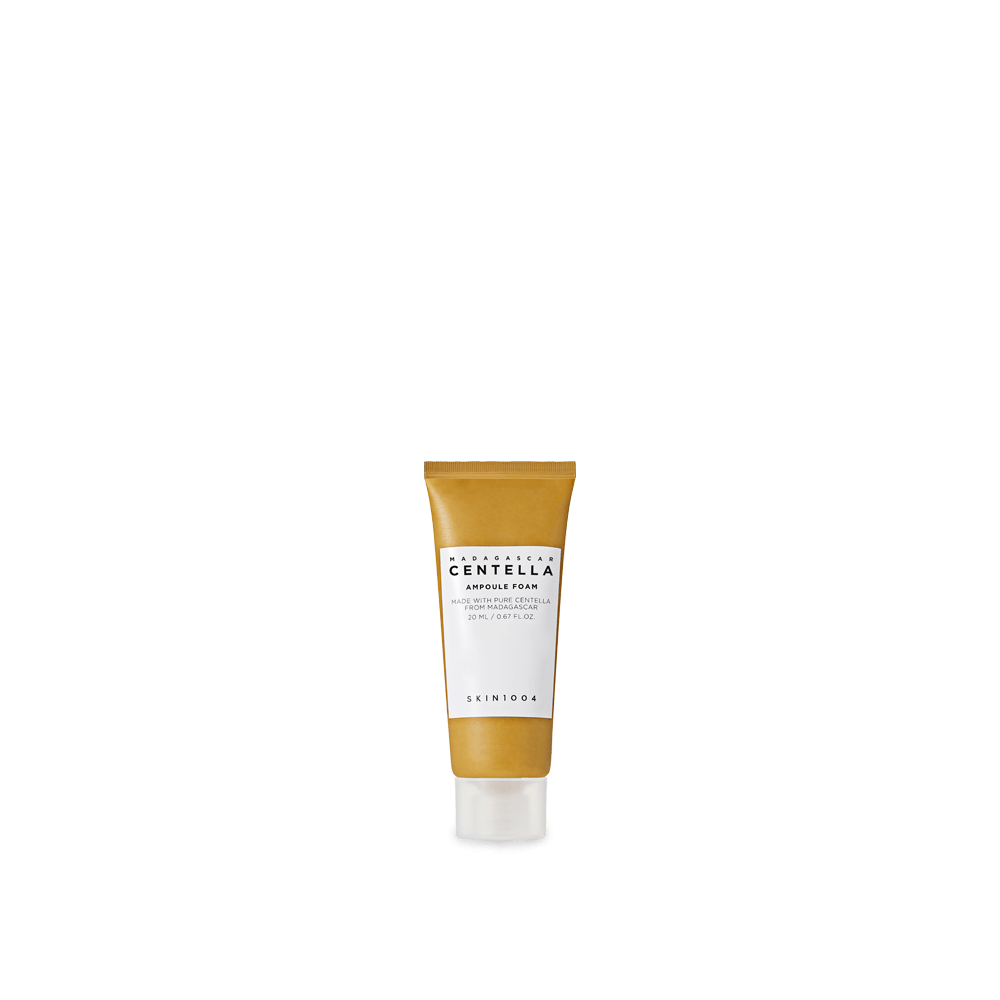
Our Centella Ampoule Foam is a pH-balanced cleanser with a specified pH of 5.5 ± 0.5 (5.0–6.0), built on coconut-derived surfactants and citric acid, formulated to cleanse without leaving skin feeling tight. Cleansing is the step most likely to sensitize skin before an active ever goes on, so it is worth getting boring and right.
For the layer after, the Centella Soothing Cream is a non-sticky soothing gel with Centella Asiatica extract, trehalose and Ceramide NP that moisturizes and helps support the skin's natural barrier. On evenings when skin feels reactive, the Centella Ampoule is our simplest option, formulated with Madagascan centella to soothe visible redness and comfort sensitive-looking skin.
One rule to keep: skip the PHA toner on nights you use azelaic acid. Stacking exfoliants is the most common reason a well-tolerated active suddenly stings. If you want the wider picture of how these formats fit together, our overview of the Centella collection covers the formats in order.
When to skip azelaic acid
Broken or actively inflamed skin is the clearest case to wait. So is an ongoing prescription regimen: if a dermatologist has you on a topical retinoid or an antibiotic combination, adding an acid without telling them muddies the picture for both of you.
WebMD also flags that azelaic acid might worsen asthma and advises speaking to a doctor before use, including before over-the-counter products, and against use on children unless a doctor directs it. Take that seriously rather than treating it as boilerplate.
FAQ
Is azelaic acid safe to use during pregnancy?
The AAD's 2024 guideline states that fetal harm from topical azelaic acid is not expected based on limited expected systemic absorption, and that topical therapies other than topical retinoids are preferred during pregnancy. That is general guidance, so confirm your own case with your doctor.
Does azelaic acid cause purging?
WebMD describes so-called purging as not a clinical term, explaining it as skin cells shedding and being replaced faster than usual, and says it should be short-lived. Reaction that keeps intensifying past a couple of weeks points to a tolerance problem worth stopping for.
Can I use it with centella or niacinamide products?
Yes, in most routines. Hydrating and barrier-supporting layers are the usual companions; the combination to avoid on the same night is another exfoliating acid, which is why we suggest alternating a PHA toner rather than stacking it.
Does a 10% product do the same thing as a prescription 15% gel?
No study establishes that. The rosacea outcomes in the 2023 systematic review were measured on 15% and 20% formulations, and a lower-strength cosmetic product inherits the mechanism while the measured outcomes stay with the concentrations that were tested.
How do I know it is working?
Look for fewer new inflammatory bumps and gradual fading of post-acne marks rather than day-to-day redness, which fluctuates with heat, alcohol and weather. Photograph the same area in the same light every two weeks.