
What Ampoule Should I Use for Very Sensitive Skin?

If your skin stings, burns or itches from products most people tolerate, choose an ampoule with one calming focus, a short ingredient list, no added fragrance and no exfoliating acids, then patch test it for 7-10 days before it goes on your whole face. In our own lineup, that ampoule is the SKIN1004 Centella Ampoule, which lists Madagascan Centella asiatica extract as its only key ingredient. If the redness comes with scaling, crusting or a diagnosed condition such as eczema or rosacea, a dermatologist's plan comes first and an ampoule plays a supporting role.
Very sensitive skin asks for what a quiet morning offers: fewer surprises. We make Centella-focused skincare, so this guide ends with our own ampoule. Before that, we share the checks we would want anyone to run on any brand's bottle, including ours, and we say plainly where our products may not suit you.
What Counts as "Ultra-Sensitive" Skin
Researchers have a working definition. The Special Interest Group on Sensitive Skin of the International Forum for the Study of Itch describes it as unpleasant sensations such as stinging, burning, pain, itch and tingling in response to stimuli that normally should not provoke them, with skin that can look normal or red and that is most often affected on the face (Acta Dermato-Venereologica, IFSI 2017).
The same group's 2020 follow-up places the problem mainly in the skin's nervous system and separates it from immune disorders. It also notes that barrier abnormalities are frequently present without a proven direct cause-and-effect link (PubMed, IFSI 2020).
That has a practical consequence for shopping. If ordinary stimuli set off the reaction, every extra ingredient is another possible trigger, so the best ampoule for this skin does one job with as few ingredients as possible.
Facial eczema follows different rules. The National Eczema Association describes it as dry, itchy patches with redness, flaking or crusting, and says fragrance-free, hypoallergenic moisturizers with colloidal oatmeal or petroleum-based ointments are best, with a dermatologist visit if symptoms persist, worsen or interfere with daily life (National Eczema Association). An ampoule is a cosmetic step that sits alongside that care.
Five Checks Before You Buy Any Ampoule
- Fragrance-free on the label. The American Academy of Dermatology advises choosing products labeled "fragrance free" and avoiding "unscented" ones, because unscented can mean a fragrance has been masked (AAD).
- None of the usual irritants. For sensitive, rosacea-prone faces, the AAD lists alcohol, camphor, fragrance, glycolic acid, lactic acid, menthol, sodium lauryl sulfate and urea as ingredients to avoid (AAD rosacea tips).
- One job per bottle. A calming ampoule with a short list is easier to judge. When a reaction happens, the AAD notes that pinpointing the exact ingredient can be difficult (AAD), and fewer ingredients leave fewer candidates to rule out.
- No exfoliation while skin is reactive. Save acids and peels for calmer weeks. Glycolic and lactic acid already sit on the AAD avoid list above.
- Noncomedogenic if you also break out. The AAD suggests looking for products that say they are noncomedogenic and made for sensitive skin (AAD rosacea tips).
Then test before you trust. The AAD recommends applying a new product to a quarter-sized patch on the inside of the arm every day for 7-10 days and using it only if the skin stays clear (AAD rosacea tips). Label wording is weak evidence here: terms like hypoallergenic or suitable for sensitive skin do not guarantee an ingredient won't cause a reaction (Medical News Today).
Centella: Evidence and Honest Limits
Centella asiatica is the plant our whole range is built around. Its best-studied compounds are four triterpenes: asiaticoside, madecassoside, asiatic acid and madecassic acid. A 2021 review indexed in PubMed Central, covering laboratory and animal research, linked them to anti-inflammatory signaling pathways relevant to acne, burns, atopic dermatitis and wounds, and it concluded that more rigorously controlled long-term clinical trials are still needed (PubMed Central review, 2021).
Centella can also cause reactions. A published case report calls it a weak sensitizer (PubMed). In a 2024 report, two patients developed eczema after applying a 1% Centella ointment to surgical wounds, and patch testing also showed co-sensitization to fragrance ingredients including lavender and geranium oils (Contact Dermatitis, 2024).
Published cases are few, and they are exactly why a patch test applies to Centella products too.
Our Pick: SKIN1004 Centella Ampoule
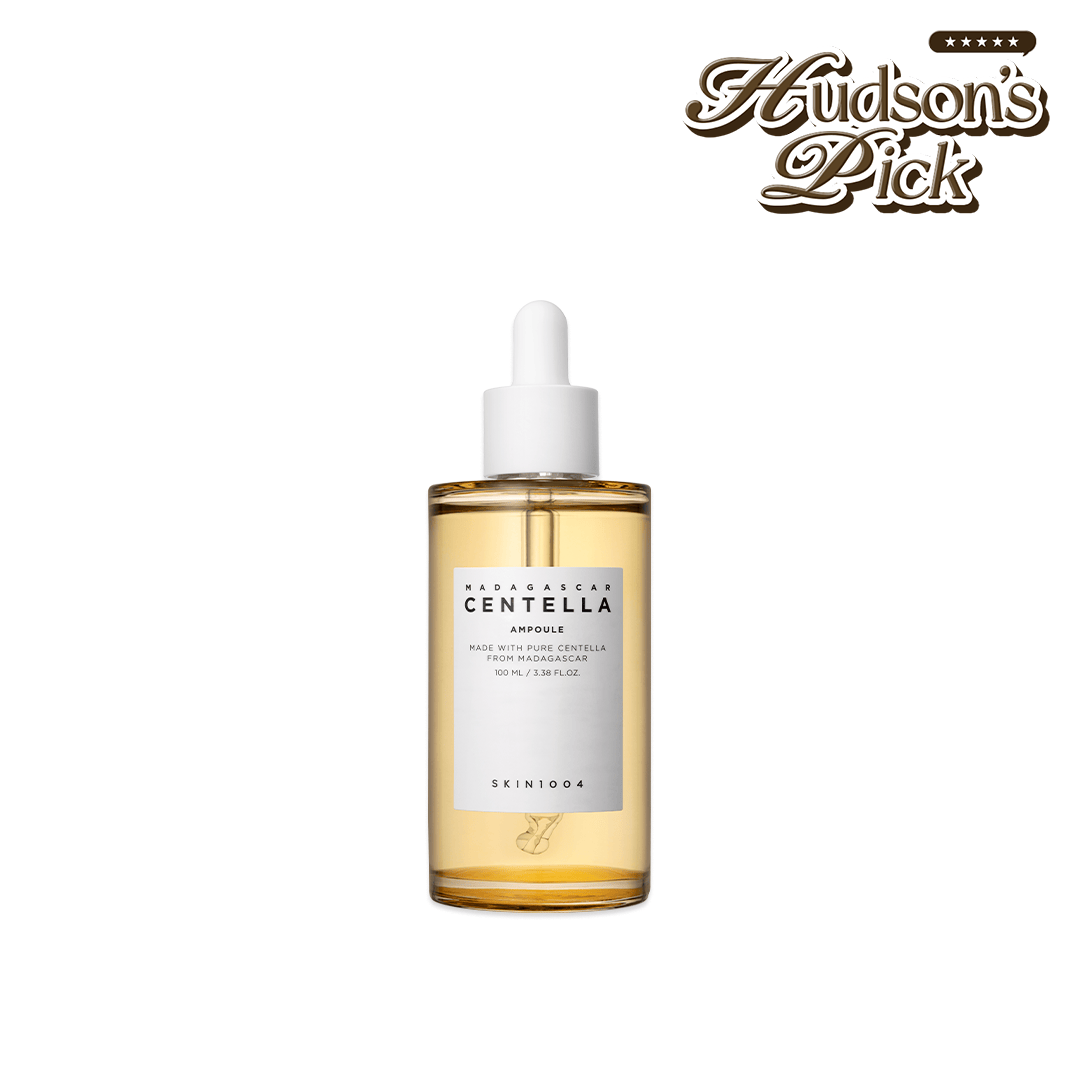
When someone with very reactive skin asks us which of our ampoules to start with, we point to the Centella Ampoule. It is formulated to help soothe visible redness and comfort sensitive-looking skin, it features Madagascan Centella asiatica extract as its listed key ingredient, and it is described as suitable for all skin types, especially dry and delicate skin.
It passes the "one job per bottle" check on our own terms. Its human noncomedogenic test ran in 2020 with 20 adults who applied it to the forehead twice daily and were assessed at weeks 0, 2 and 4; we explain what that design shows in What Makes an Ampoule Truly Non-Comedogenic?.
Where it falls short is worth stating too. That test measured pore-clogging on forehead skin. Stinging and sensitive-skin tolerance were outside its scope, so it cannot promise your skin won't react. Its only listed key ingredient is Centella, so if your barrier feels tight and dry you will want a cream on top. And because Centella itself can sensitize a small number of people, the 7-10 day arm test still applies. Read the full ingredient list on the product page against anything you already know you react to.
A Short Routine Around the Ampoule
Keep the routine to cleanse, treat and moisturize, and add one new product at a time. Dr. Garshick, a dermatologist quoted by the AAD, recommends introducing one new product at a time to see whether skin tolerates it (AAD).
| Step | SKIN1004 product | Listed key ingredients | Note for very sensitive skin |
|---|---|---|---|
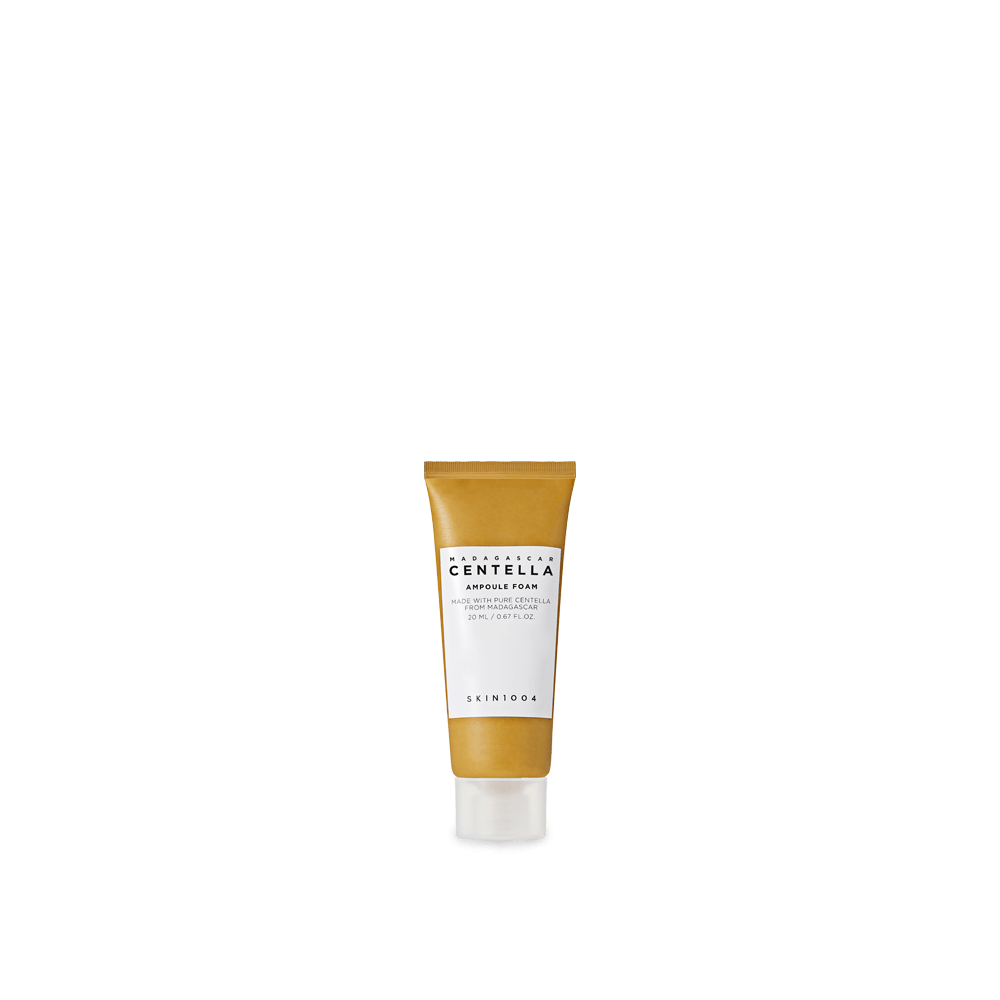
| Cleanse | Centella Ampoule Foam | Centella asiatica extract, citric acid, sodium hyaluronate; coconut-derived surfactants | pH-balanced; its page also lists "mild exfoliation" as a benefit, so patch test it |
| Remove makeup (only when needed) | Centella Light Cleansing Oil | Centella plus six plant oils, including bergamot, geranium (Pelargonium graveolens) and damask rose flower oils | Skip it if you know you react to fragrant plant oils |
| Treat | Centella Ampoule | Madagascan Centella asiatica extract | The single-focus step |
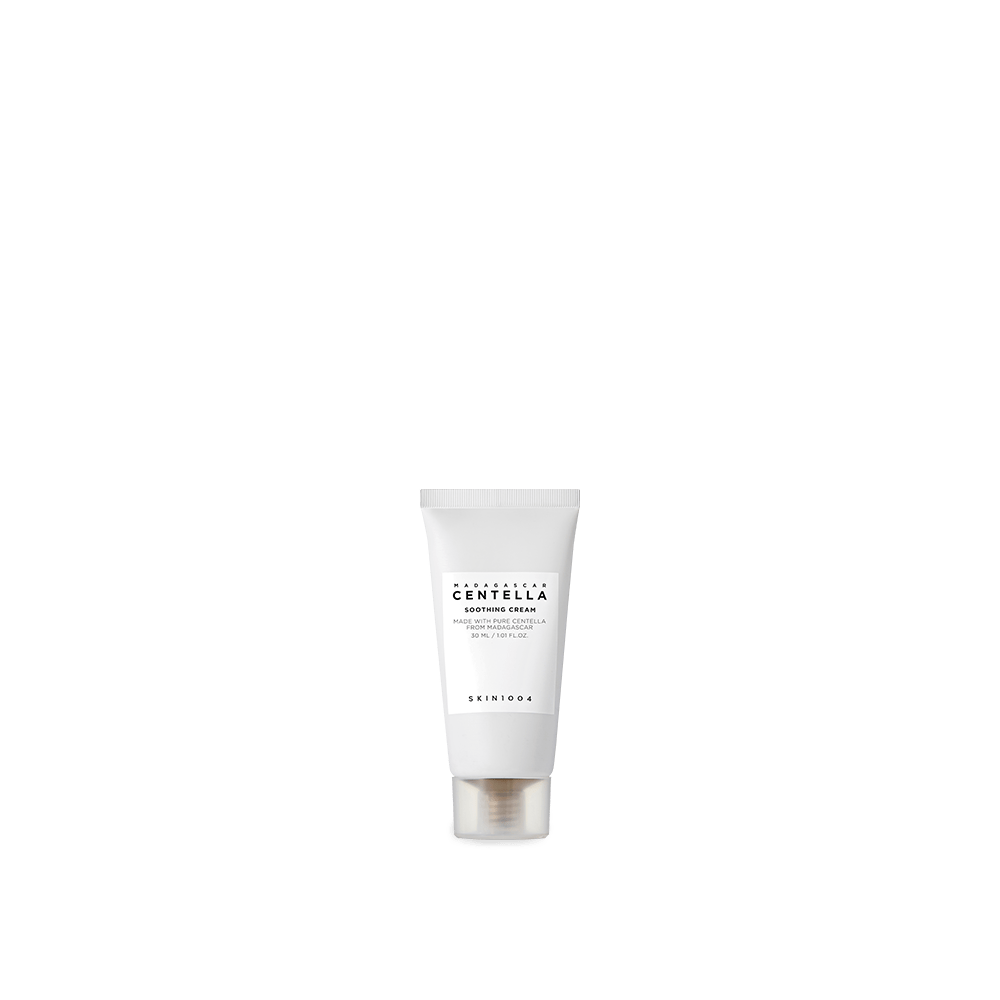
| Moisturize (gel) | Centella Soothing Cream | Centella, trehalose, sodium hyaluronate, ceramide NP, cholesterol | Non-sticky gel that helps support the skin's natural barrier |
| Moisturize (cream) | Centella Cream | Centella, panthenol, TECA (madecassoside, asiaticoside, madecassic acid, asiatic acid) | Light cream for skin that wants more cushion |
| Pause for now | Centella Toning Toner | Centella, gluconolactone (a PHA), betaine | A gentle exfoliant, yet still an exfoliant; bring it back once skin is calm |
If your skin feels tight as well as reactive, our guide to serums for a damaged skin barrier goes deeper on the moisturizing side.
Centella Ampoule
19.8 USD
Shop now
Centella Soothing Cream
7.5 USD
Shop now
Centella Ampoule Foam
4 USD
Shop now
When to Stop and See a Dermatologist
If a product causes a reaction, the AAD advises washing it off gently as soon as possible and not using it again, with a cool compress or petroleum jelly for relief. A severe reaction, or one you cannot trace to a single ingredient, is a reason to see a board-certified dermatologist, who may order medical patch testing (AAD).
Persistent dry, flaking or crusting patches point toward eczema. For those, the National Eczema Association recommends a dermatologist if symptoms persist, worsen or disrupt daily life (National Eczema Association).
FAQ
Does "hypoallergenic" mean a product is safe for my skin?
Treat those words as a starting point. Terms such as hypoallergenic, organic or suitable for sensitive skin do not guarantee that none of the ingredients will cause a reaction (Medical News Today). The ingredient list and your own patch test tell you more.
Is the Centella Ampoule a hyaluronic acid serum?
The Centella Ampoule contains no sodium hyaluronate. If hyaluronic acid is what you want, our hyaluronic acid product comparison shows which SKIN1004 products include it.
Can I use an ampoule alongside a prescription cream?
Follow your prescriber first. For eczema, the National Eczema Association advises applying prescription topical medication as directed before moisturizing and not applying moisturizer over the medicated areas (National Eczema Association). Ask your dermatologist where a cosmetic ampoule fits in that order.
Why doesn't my US bottle say "noncomedogenic"?
The Centella Ampoule completed a human noncomedogenic test, and that wording appears on the Korean packaging. The US/Canada and EU/UK packaging do not carry it. The test result and the label wording are separate facts, and the label differs by market.
Start With One Calm Step
For skin that reacts to almost everything, begin with one product and one 7-10 day patch test. If you want a single-focus Centella step to try first, discover the SKIN1004 Centella Ampoule, inspired by THE UNTOUCHED NATURE of Madagascar.