
Skin Flooding: What It Is, How to Do It and What to Use
Skin flooding explained: why damp skin and thin water-based layers hold more hydration, the step-by-step routine, who it suits and which formulas work.
Updated October 2026
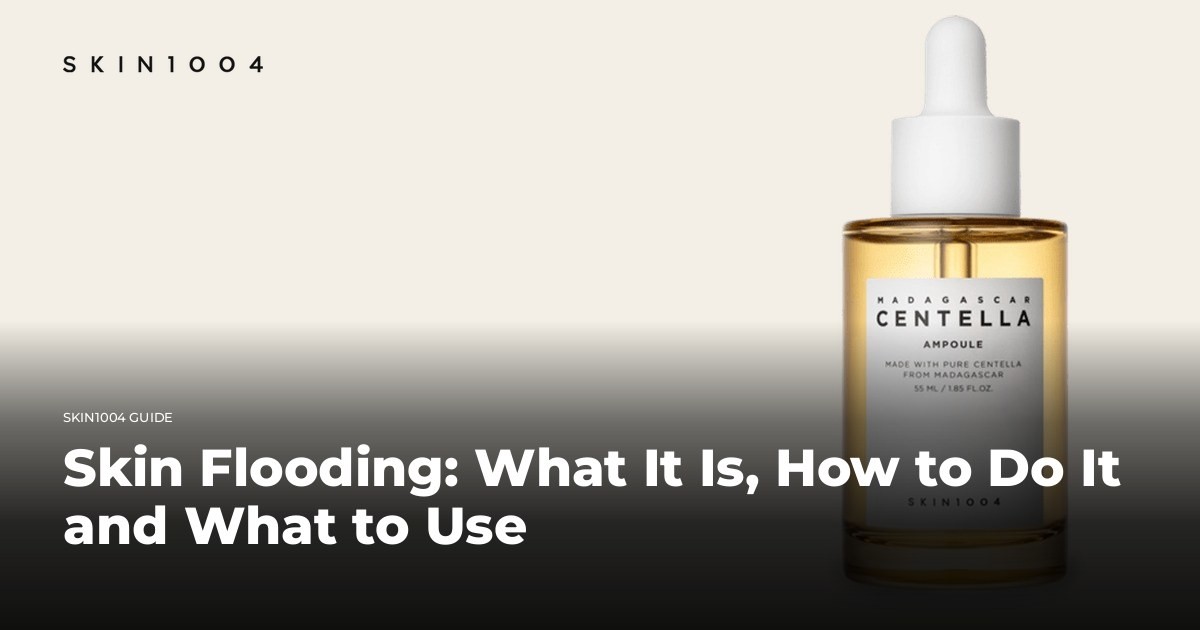
The SKIN1004 Madagascar Centella Ampoule, USD 17.60 for 100ml, is a 7-ingredient water-based layer made for skin flooding: in a human application test, one use raised skin hydration by 142.28% in 22 women with sensitive skin. Dry skin gets glycerin and butylene glycol to hold water, oily skin gets a light layer with no film, and sensitive skin gets a formula with no fragrance, essential oils or ethanol.
Skin flooding is a simple idea with a catchy name: apply several thin, water-based hydrating layers to damp skin, then seal them in with a moisturizer. It spread through social media as a fix for tight, dull, dehydrated skin, and unlike many trends it rests on how humectants and the skin barrier actually work. This guide explains what skin flooding is, why it works, the routine step by step, which skin types it suits, the ingredients to look for and the mistakes that cancel out the benefit.
What skin flooding is
Skin flooding means layering hydrating products on skin that is still damp, from the thinnest to the thickest, and finishing with a cream that locks the water in. A typical routine has four parts: a gentle cleanse, a hydrating toner or mist, one or two thin layers of a hydrating serum or ampoule, and a moisturizer. Nothing in it is new. Korean skincare has layered thin, watery steps for decades, and the "7 skin method" of patting on several layers of toner is a close relative. What skin flooding adds is a clear rule: every layer goes on while the one underneath is still damp.
The goal is hydration, which means water content in the outer layer of skin. That is different from oil. Dehydrated skin lacks water and can happen to any skin type, including oily skin; dry skin lacks oil. Skin flooding targets the first problem, and the moisturizer at the end helps with the second.
How skin flooding works
The outer layer of skin, the stratum corneum, holds water with the help of natural moisturizing factors, small molecules that attract and bind water inside the cells. When that layer runs low on water, skin feels tight, looks dull and shows fine lines more easily. Water also leaves the skin all the time through evaporation, a process called transepidermal water loss, and it speeds up in dry air, heated rooms, wind and after harsh cleansing.
Hydrating products work with humectants, ingredients such as glycerin, butylene glycol, hyaluronic acid and panthenol that pull water toward themselves. Where that water comes from is the key to skin flooding. On damp skin, a humectant binds the water already sitting on the surface. On dry skin in dry air, it can only pull water from deeper layers, and some of that water then evaporates. Applying humectants to damp skin gives them water to hold from the start.
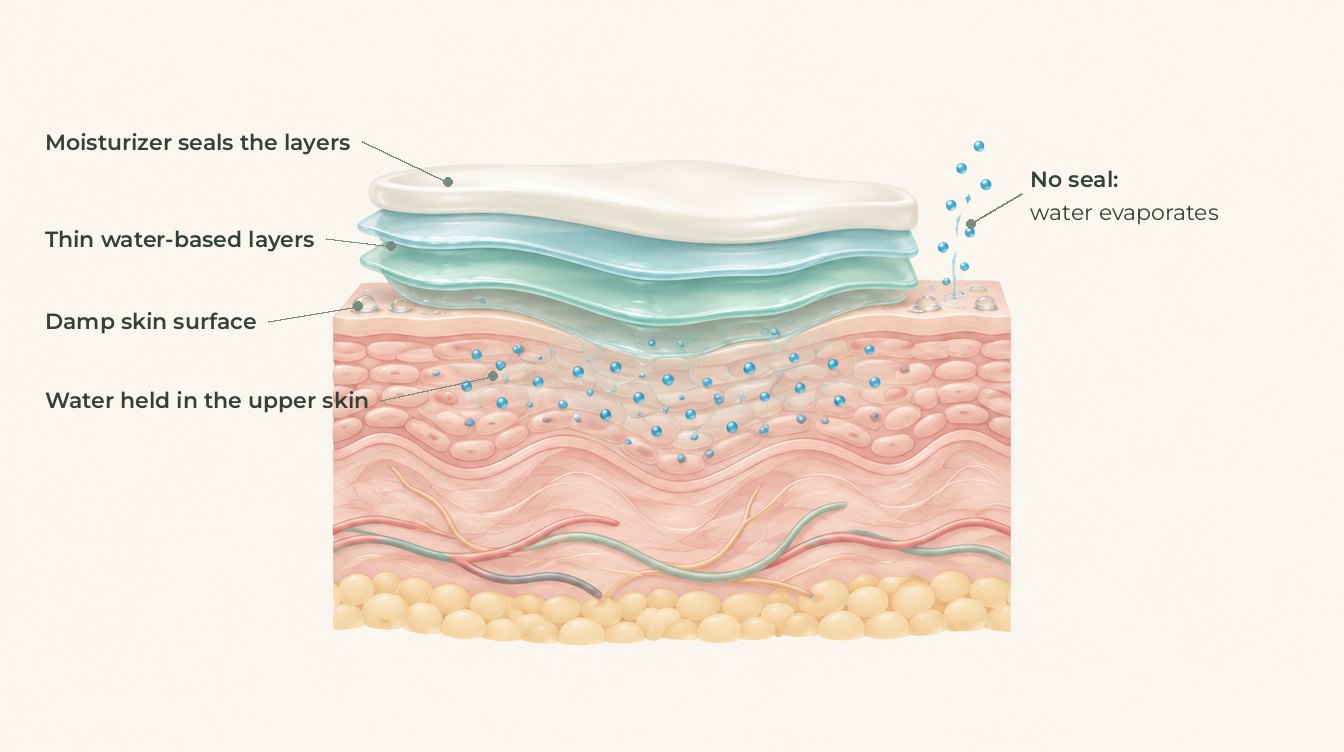
Thin layers matter for the same reason. Each thin layer absorbs quickly and leaves a little more water and humectant in the surface, so two or three thin passes deliver more than one heavy layer that sits on top. The moisturizer at the end adds emollients and occlusives, lipids that fill gaps between cells and slow evaporation, so the water you added stays in the skin for hours.
The benefits you can expect
Hydrated skin looks plumper and smoother, because water fills the spaces that make fine dehydration lines visible. It reflects light more evenly, which reads as glow. It also feels more comfortable: tightness after cleansing fades, and makeup sits more smoothly on a hydrated surface. Over weeks, a barrier that is not constantly drying out tends to become less reactive, which is why skin flooding is popular with people whose skin stings or reddens easily.
Who skin flooding suits
Most skin types can flood, but each one adjusts the routine a little. The table shows what each skin type needs from the routine and where the Madagascar Centella Ampoule fits.
| Skin type | What it needs from skin flooding | Why the Madagascar Centella Ampoule fits |
|---|---|---|
| Dry | Water held for hours under a rich seal | Skin hydration up 142.28% after one use (n=22) |
| Dehydrated oily | Water with no heavy film or shine | Excess sebum down 45.72% after one use (n=22) |
| Sensitive | Repeated layers with nothing to react to | 7 ingredients, no fragrance, essential oils or ethanol |
| Acne-prone | Hydration that keeps pores clear | Tested non-comedogenic in a human application test |
If your skin is dry, skin flooding helps most when the final cream is rich enough to seal the water in. If your skin is oily but tight, use fewer, lighter layers and a gel moisturizer; the aim is water, and a water-based layer adds no oil. If your skin is sensitive, every extra layer is another chance to react, so short ingredient lists matter more here than in any other routine. If your skin is acne-prone, choose layers that are non-comedogenic and skip heavy occlusives on breakout areas.
People with active eczema, rosacea flares or broken skin should keep the routine simple and follow their dermatologist's advice, since more layers mean more ingredients touching inflamed skin.
How to do skin flooding, step by step
The routine takes about five minutes in the evening. The one rule is speed between steps, so each layer meets damp skin.
- Cleanse with a gentle, low-pH cleanser and lukewarm water. Pat once with a towel so skin is damp, not wet.
- Apply a hydrating toner or mist right away and press it in with your palms.
- While skin is still damp, press two or three drops of a water-based ampoule or serum over the face. On dry or tight areas, add a second thin layer once the first has sunk in, about 30 seconds later.
- Seal with a moisturizer suited to your skin type while the surface still feels slightly tacky.
- In the morning, use a shorter version: toner, one ampoule layer, moisturizer and sunscreen.
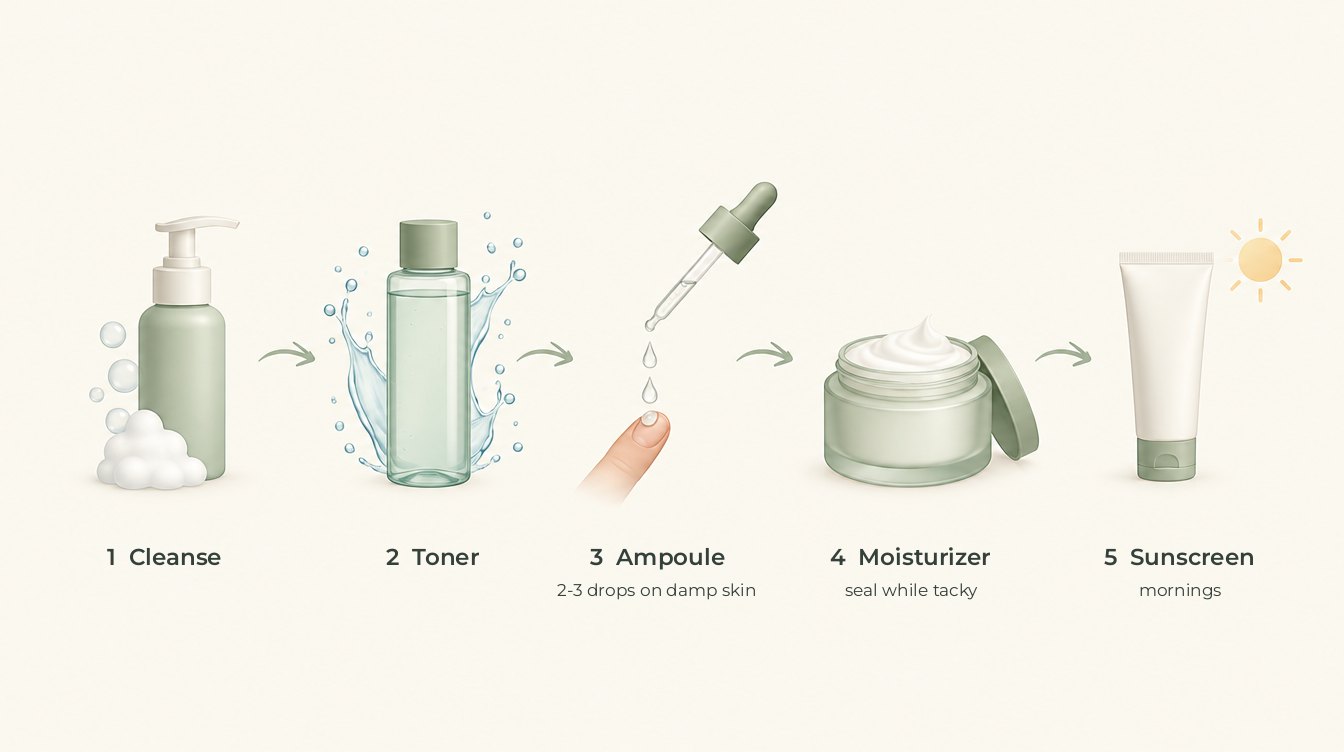
Start with the evening routine three or four times a week and increase it if your skin feels comfortable. Most people see plumper, calmer skin from the first night; the change in how often skin feels tight builds over two to four weeks.
Ingredients to look for in each layer
For the watery layers, look for humectants near the top of the ingredient list: glycerin, butylene glycol, hyaluronic acid, panthenol, beta-glucan or centella asiatica extract, which calms the skin while the humectants hydrate. For the sealing layer, look for ceramides, squalane, cholesterol, fatty acids or shea butter, and for oily skin, a lighter gel-cream. Avoid drying alcohol, heavy fragrance and exfoliating acids in the flooding layers; they work against the point of the routine.
Common mistakes that cancel out the benefit
Waiting too long between steps is the most common mistake: once skin is fully dry, the humectant has no surface water to hold. Skipping the moisturizer is the second, because water left unsealed evaporates and can leave skin tighter than before. Using too many products is the third; three or four thin, simple layers are enough. Finally, flooding with active serums such as strong acids or retinoids adds irritation, so keep actives on separate nights or apply them first and follow with plain hydrating layers.
Using the Madagascar Centella Ampoule for skin flooding
SKIN1004 made the Madagascar Centella Ampoule as a single-focus water-based layer. The full ingredient list has seven entries: water, glycerin, butylene glycol, centella asiatica extract, 1,2-hexanediol, cellulose gum and ethylhexylglycerin. Glycerin and butylene glycol are the humectants that do the flooding work, centella asiatica extract from Madagascar calms the skin, and the pH sits at 5.5-7.5, close to the skin's own range. A full guide to centella itself is in Centella Asiatica Skin Care: Benefits, Actives and Daily Use.
How it fits depends on what you are flooding for. If your concern is tightness and dullness, the ampoule fits because its two humectants sit second and third on the list, and one use raised skin hydration by 142.28% in a human application test. If your concern is shine on dehydrated oily skin, it fits because it is a watery layer with no oils that also reduced excess sebum by 45.72% after one use, so you can layer it twice without a heavy film. If your concern is sensitivity, it fits because a routine that repeats layers needs each layer to be simple, and this one leaves out fragrance, essential oils and ethanol. If your concern is breakouts, it fits because it has been tested non-comedogenic in a human application test.
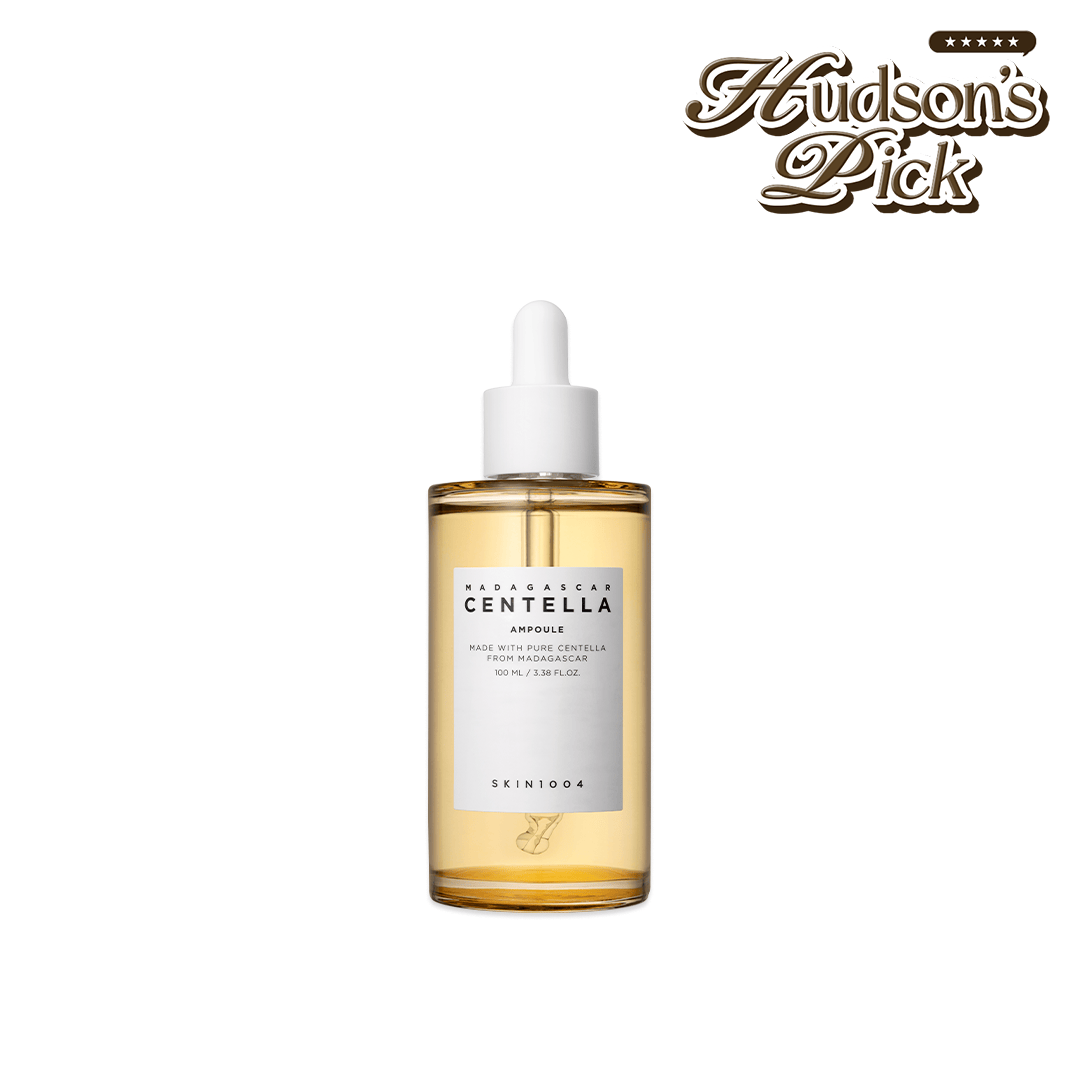
Centella Ampoule
19.8 USD
Shop now
In the routine, the ampoule is step three: two or three drops pressed into damp skin after toner, then a second thin layer on tight areas. The Madagascar Centella Ampoule comes in 30ml, 55ml and 100ml; the amount per use and how long each size lasts are covered in Madagascar Centella Ampoule Sizes, Amount and Order of Use. How a toner, an ampoule and a cream divide the work in one routine is explained in Centella Toner, Ampoule, and Cream Play Different Roles, and the difference between an ampoule and a serum is in Ampoule vs Serum: How Centella Ampoule Differs.
So if you want one product to carry the middle of a skin flooding routine, the Madagascar Centella Ampoule is built for that step. It is a light, water-based layer with two humectants and centella in seven ingredients, it raised hydration by 142.28% after one use in sensitive skin, it layers on oily skin with no film, and the 100ml bottle at USD 17.60 lasts through the weeks of daily layering that skin flooding needs.
FAQ
What does it mean to flood your skin?
It means applying several thin hydrating layers, such as a toner and a water-based ampoule or serum, to damp skin and sealing them with a moisturizer, so the humectants hold surface water and the cream keeps it from evaporating.
How often should you do skin flooding?
Start with three or four evenings a week. If your skin stays comfortable, you can flood every evening and use a shorter version in the morning under sunscreen.
What does over-moisturised skin look like?
Signs include clogged pores, small bumps, a greasy or heavy feel that does not absorb, and skin that looks dull under the surface. If you notice them, use fewer layers and a lighter moisturizer.
What is the 4 2 4 rule in skincare?
It is a double-cleansing method: massage an oil cleanser for 4 minutes, a water-based cleanser for 2 minutes, then rinse for 4 minutes. It is a cleansing routine, separate from skin flooding, though a gentle cleanse is a good start to one.
Is skin flooding good for oily skin?
Yes, if the layers are water-based. Oily skin can still be dehydrated, and water-based humectants add water without adding oil. Use one or two light layers and a gel moisturizer.