
Centella Asiatica Skin Care: Benefits, Actives and Daily Use
Centella asiatica skin care explained: the four actives behind its soothing and repair benefits, which skin types it suits, and how to use it every day.
Updated October 2026
SKIN1004 builds the Madagascar Centella Ampoule, USD 17.60 for 100ml, on centella asiatica extract from Madagascar in a 7-ingredient formula that calms redness and hydrates in one step. Dry and sensitive skin feel it first: in a human application test, one use raised skin hydration by 142.28% in 22 women with sensitive skin. Oily and combination skin get a lighter benefit, a calm surface with less shine.
Centella asiatica has become one of the most trusted ingredients in skincare because it does several things at once: it calms irritation, supports the skin barrier, helps damaged skin repair, and protects against the daily stress that dulls and reddens a complexion. This guide explains what the plant is, which of its compounds do the work, which skin types benefit most, how to use it in a routine, and what to pair it with.
What centella asiatica is
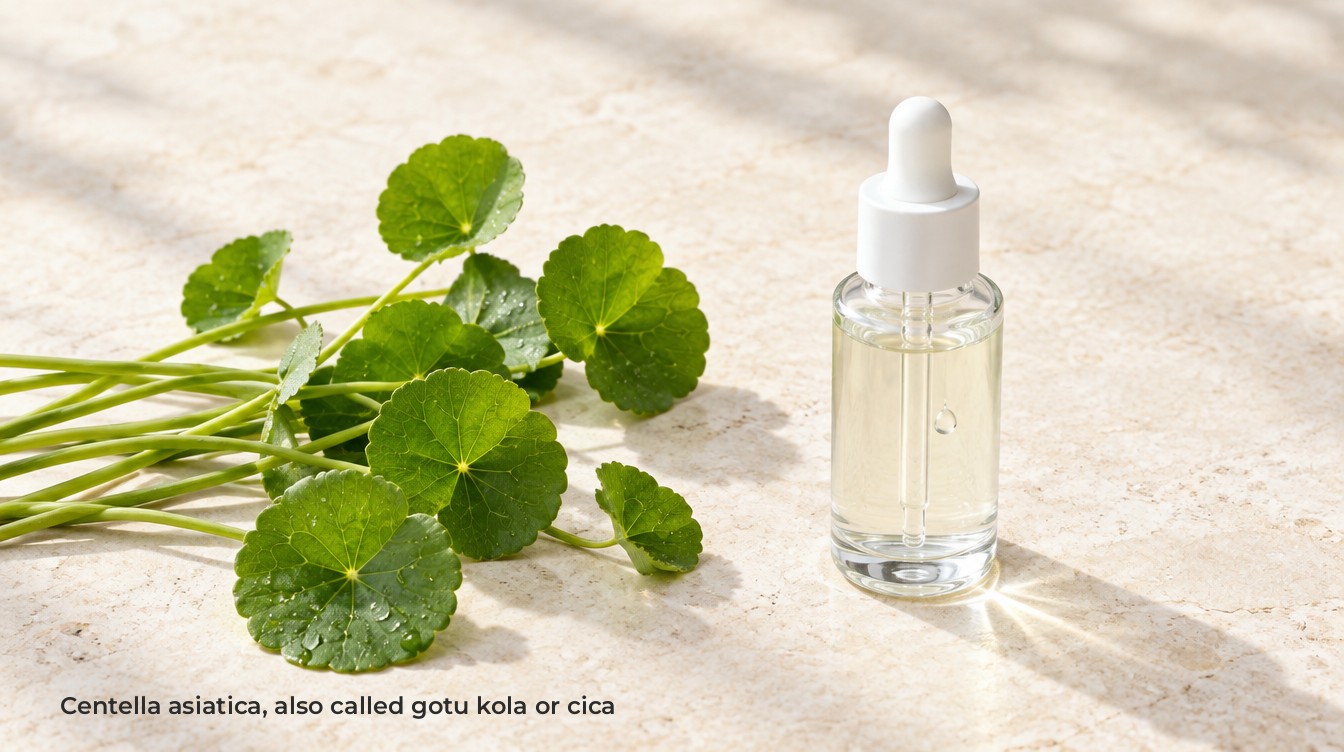
Centella asiatica is a small, creeping herb from the parsley family that grows in damp, tropical soil across South and Southeast Asia, Africa and Madagascar. It goes by many names: gotu kola in South Asian traditional medicine, "tiger grass" from the old story of injured tigers rolling in it to heal their wounds, and "cica" in skincare, short for the French word cicatrice, scar. Each name points to the same reputation: a plant that helps skin recover.
Its skin benefits come from a group of compounds called pentacyclic triterpenes. Four of them do most of the work: asiaticoside, madecassoside, asiatic acid and madecassic acid. Asiaticoside and madecassoside are the plant's marker compounds, the ones used to measure the quality of an extract, and they are joined by flavonoids and other polyphenols that add antioxidant protection. The amount of these actives depends on where and how the plant is grown and how the extract is made, which is why the origin and the extract matter in a finished product. Madagascar is one of the major sources of centella for skincare.
What centella asiatica does for skin
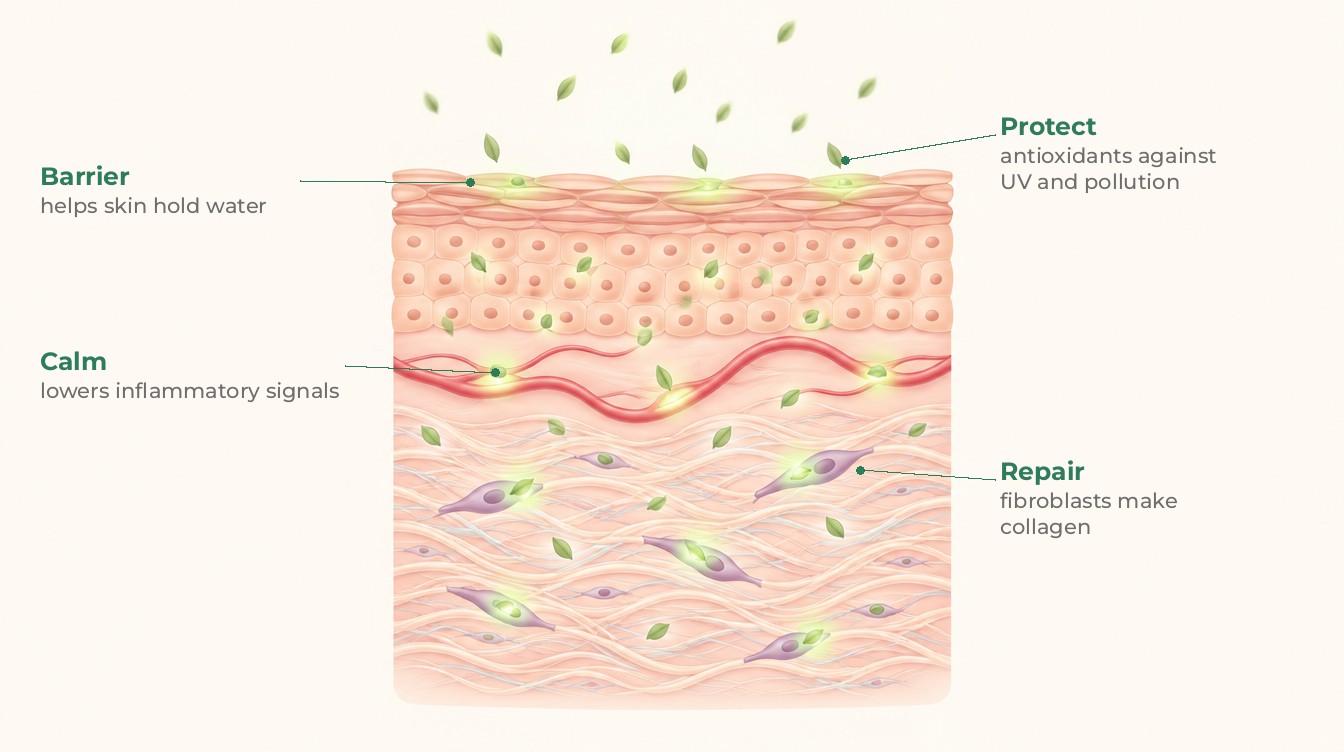
The four triterpenes act on several layers of the skin at once. That breadth is the reason centella appears in products for redness, dryness, breakouts and early signs of aging alike.
It calms redness and irritation
Irritated skin releases inflammatory messengers such as interleukins and tumor necrosis factor, and those messengers widen small blood vessels and make skin red, hot and reactive. Madecassoside and asiaticoside lower the production of these messengers and the enzymes that amplify them, so the inflammation settles faster. This is why centella is a first choice after sun exposure, over-exfoliation, a strong active or a breakout, and for skin that reddens after cleansing.
It supports the barrier and hydration
The skin barrier is a layer of flattened cells and lipids that keeps water in and irritants out. When it is weakened, water escapes, skin feels tight and flaky, and irritants reach the living layers more easily. Centella supports the cells that build this barrier and calms the low-grade irritation that keeps it from recovering, so skin holds water better over time. In a formula with humectants such as glycerin, the hydration effect is immediate as well.
It helps skin repair
Centella's best-documented effect is on repair. Its triterpenes stimulate fibroblasts, the cells in the dermis that make collagen and fibronectin, the proteins that give skin its structure and help new tissue form. That is why centella has a long medical history in wound and burn care, and why it helps marks left by breakouts settle and why skin with early lines benefits from regular use.
It protects against daily stress
UV, pollution and heat create free radicals that break down collagen and trigger new inflammation. The triterpenes and polyphenols in centella neutralize part of that oxidative stress, which adds a layer of daily protection under sunscreen.
Which skin types centella asiatica suits
Centella suits almost every skin type because its main effects, calming and hydration, are useful to all of them. What changes from one skin type to the next is what you want from it. The table shows how each skin type uses centella and why the Madagascar Centella Ampoule fits.
| Skin type | What the skin needs from centella | Why the Madagascar Centella Ampoule fits |
|---|---|---|
| Sensitive | Calm redness and reactivity | 7 ingredients, no fragrance, essential oils or ethanol |
| Dry | Hydration that lasts | Skin hydration up 142.28% after one use (n=22) |
| Oily and combination | Calm skin with less shine | Excess sebum down 45.72% after one use (n=22) |
| Acne-prone | Soothing that keeps pores clear | Tested non-comedogenic in a human application test |
If your skin is sensitive or reactive, centella is one of the gentlest calming ingredients available, and a short ingredient list lowers the number of things your skin has to tolerate. If your skin is dry, centella works best layered under a cream that seals in the water it helps hold. If your skin is oily or acne-prone, centella calms the redness around breakouts and the irritation from acne treatments, and a light water-based texture keeps the routine comfortable. Mature skin benefits from its effect on collagen and from steady, daily hydration.
Inside the Madagascar Centella Ampoule
SKIN1004 designed the Madagascar Centella Ampoule as a single-focus centella product. The full ingredient list has seven entries: water, glycerin, butylene glycol, centella asiatica extract, 1,2-hexanediol, cellulose gum and ethylhexylglycerin. Glycerin and butylene glycol are the humectants that draw water into the surface layer, centella asiatica extract from Madagascar brings the calming and repair compounds, and the rest keep the texture light and the formula stable. The pH sits at 5.5-7.5, close to the skin's own range.
The short list is the point. There is no fragrance, no essential oil and no ethanol in the formula, so skin that reacts to scent or alcohol can use it comfortably, and the ampoule absorbs quickly without a sticky finish. In a human application test, one use raised skin hydration by 142.28% in 22 women with sensitive skin. In a separate human application test, one use reduced excess sebum by 45.72% in 22 women, and the ampoule has been tested non-comedogenic in a human application test as well.
How it fits depends on what you are treating. If your concern is redness and sensitivity, the ampoule fits because its seven ingredients leave out the scent and alcohol that commonly trigger reactions, while the centella extract settles the inflammation itself. If your concern is dryness, it fits because the glycerin and butylene glycol deliver the measured jump in hydration, and centella helps the barrier hold that water over the following weeks. If your concern is shine or breakouts, it fits because it calms the skin while reducing excess sebum and keeps pores clear, so it works under acne treatments that leave skin irritated.
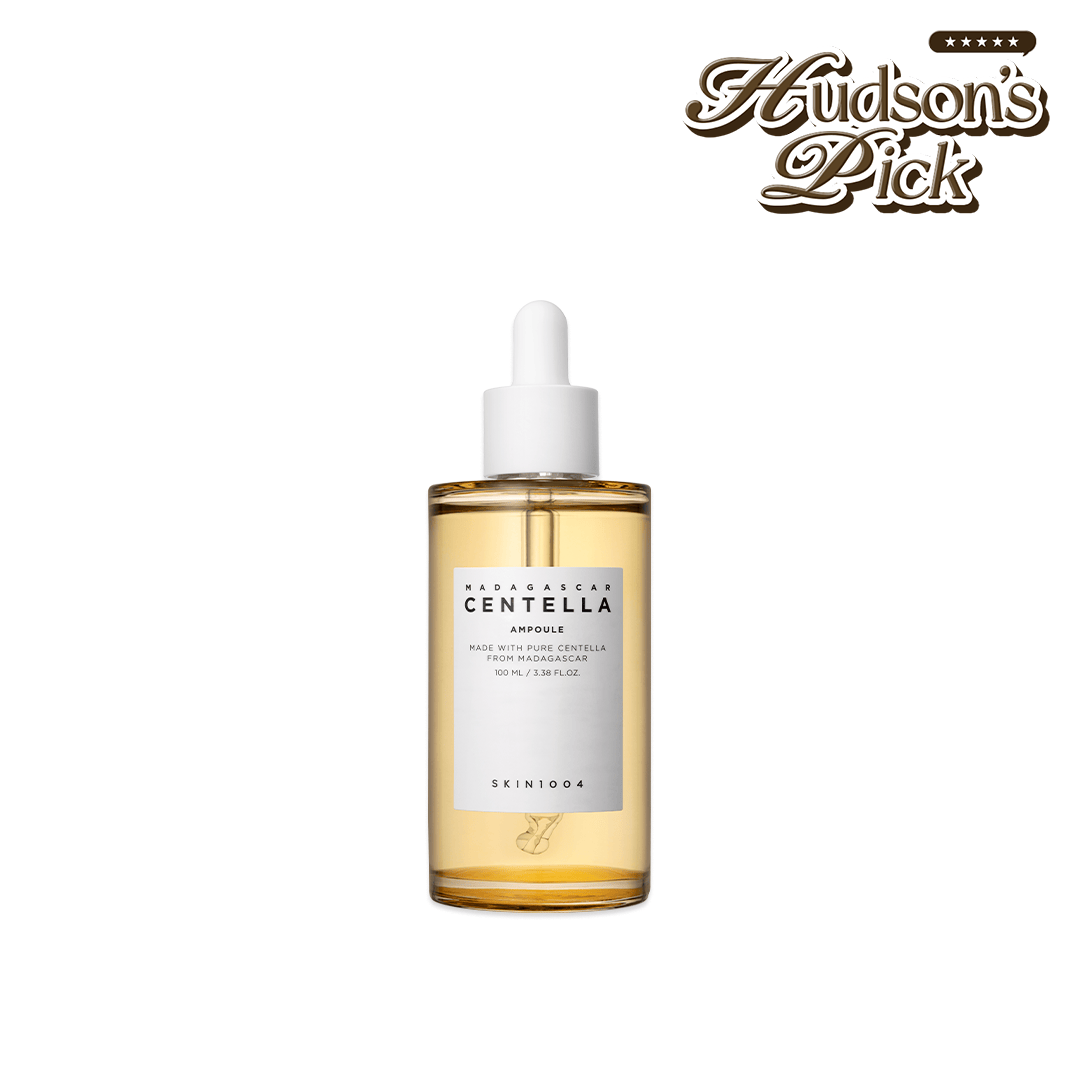
The Madagascar Centella Ampoule comes in 30ml, 55ml and 100ml sizes. A full guide to the sizes, the amount per use and where it sits in a routine is in Madagascar Centella Ampoule Sizes, Amount and Order of Use.
Centella Ampoule
19.8 USD
Shop now
How to use centella asiatica in a routine
Centella is gentle enough for morning and evening use from the first day. It works best as a water-based layer right after cleansing and toner, so it reaches clean skin before heavier products.
- Cleanse with a gentle cleanser and pat skin almost dry.
- Apply toner if you use one.
- Press two or three drops of the ampoule over the whole face; on red or dry areas, add a second thin layer.
- Seal with moisturizer once it has absorbed.
- In the morning, finish with sunscreen.
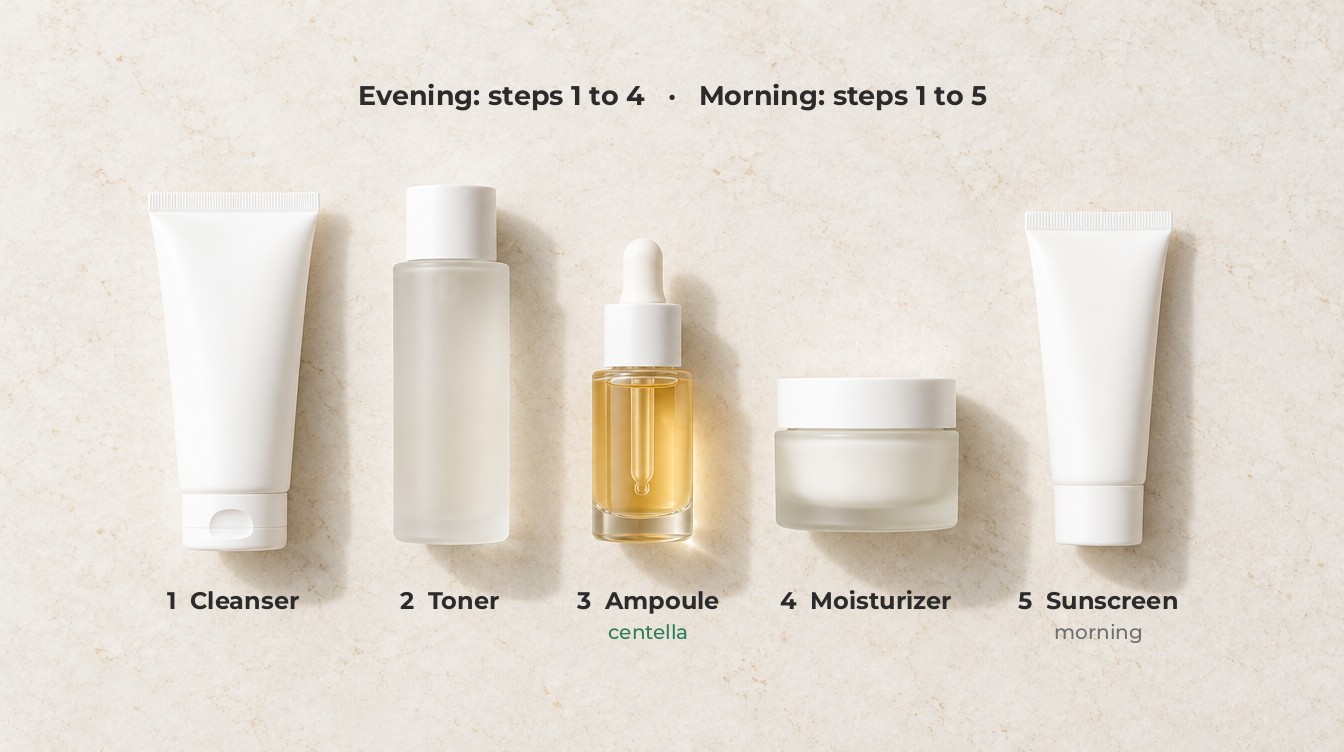
The calming effect starts with the first application: redness and tightness settle within minutes, and hydration rises right away. Barrier support builds over two to four weeks of daily use, and the effect on texture and marks over eight to twelve weeks, the time skin needs to renew its surface layers a few times.
Thin layers work better than one thick layer. Centella in a light ampoule absorbs quickly, so two thin layers on dry or irritated areas deliver more than a heavy application that sits on the surface. On days your skin feels raw after a peel or a strong active, use centella on its own with moisturizer and pause the other actives until skin calms. The way an ampoule differs from a serum in that routine is explained in Ampoule vs Serum: How Centella Ampoule Differs.
What to pair with centella asiatica
Centella pairs with nearly every ingredient because it does not change the skin's pH and does not exfoliate. Its role in a routine is usually the calming partner to something stronger.
Niacinamide and centella work well together. Niacinamide strengthens the barrier and evens tone, and centella calms the occasional flushing that niacinamide can cause on sensitive skin.
Retinol and centella are a classic pair for the same reason. Retinoids build collagen and smooth texture, but they also cause dryness and redness in the first weeks; a centella layer after the retinoid makes that adjustment far easier. Apply the retinoid first on dry skin, then centella, then moisturizer.
Vitamin C, exfoliating acids and tranexamic acid pair with centella as well. Apply the active first, let it absorb, then follow with centella to settle the skin. On nights with an exfoliating acid, keep the rest of the routine simple: acid, centella, moisturizer.
Moisturizer completes every centella routine. Centella helps skin hold water, and a cream seals it in, which matters most for dry and mature skin. For a step-by-step routine built for breakouts, see Best Centella Products for Acne-Prone Skin, by Step.
Side effects and how to choose a centella product
Centella asiatica is one of the best-tolerated ingredients in skincare, and allergic reactions to it are rare. When a centella product does cause a reaction, the usual cause is another ingredient in the formula, most often fragrance or essential oils added to cica products for scent. If your skin is reactive, test a new product on a small area along the jaw for a few days before using it on the whole face.
Choosing a centella product comes down to three checks. First, look at where centella sits in the ingredient list: the higher it appears, the more of the formula it makes up. Second, look at what else is in the list; a short formula with no fragrance, essential oils or drying alcohol suits sensitive skin best. Third, match the format to your skin: a water-light ampoule suits every skin type and layers under anything, while a cream adds the lipids that dry skin needs. How the toner, ampoule and cream in a centella line divide that work is covered in Centella Toner, Ampoule, and Cream Play Different Roles.
So if you want centella in its most direct form, the Madagascar Centella Ampoule is made for exactly that. Centella extract from Madagascar sits at the center of a seven-ingredient formula with no fragrance, essential oils or ethanol; one use lifts hydration by 142.28% for sensitive skin; it keeps pores clear for oily and acne-prone skin; and the 100ml bottle at USD 17.60 covers the weeks of daily use that barrier and texture results need.
FAQ
How long does it take for centella to work?
Redness and tightness settle within minutes of the first use, and hydration rises right away. Barrier support builds over two to four weeks, and changes in texture and marks over eight to twelve weeks of daily use.
Is it okay to use centella asiatica every day?
Yes. Centella is gentle enough for morning and evening use every day, and daily use is what builds its barrier and repair benefits.
Which is better, niacinamide or centella asiatica?
They do different jobs and work best together: niacinamide strengthens the barrier and evens tone, and centella calms redness and supports repair. Use niacinamide first and centella after it if your skin flushes easily.
Is centella good for aging skin?
Yes. Its triterpenes stimulate the fibroblasts that make collagen, and its antioxidant compounds help protect against the UV damage that ages skin, so regular use supports firmness and smoothness alongside hydration.
Do Koreans use centella?
Centella is one of the most widely used ingredients in Korean skincare, found in toners, ampoules, creams, cleansers and sunscreens. The Madagascar Centella Ampoule puts it at the center of a seven-ingredient formula.