
Best Barrier Serum for Acne-Prone Skin
Acne-prone skin needs light hydration and non-comedogenic proof. See why SKIN1004 Centella Ampoule fits a barrier-focused routine.
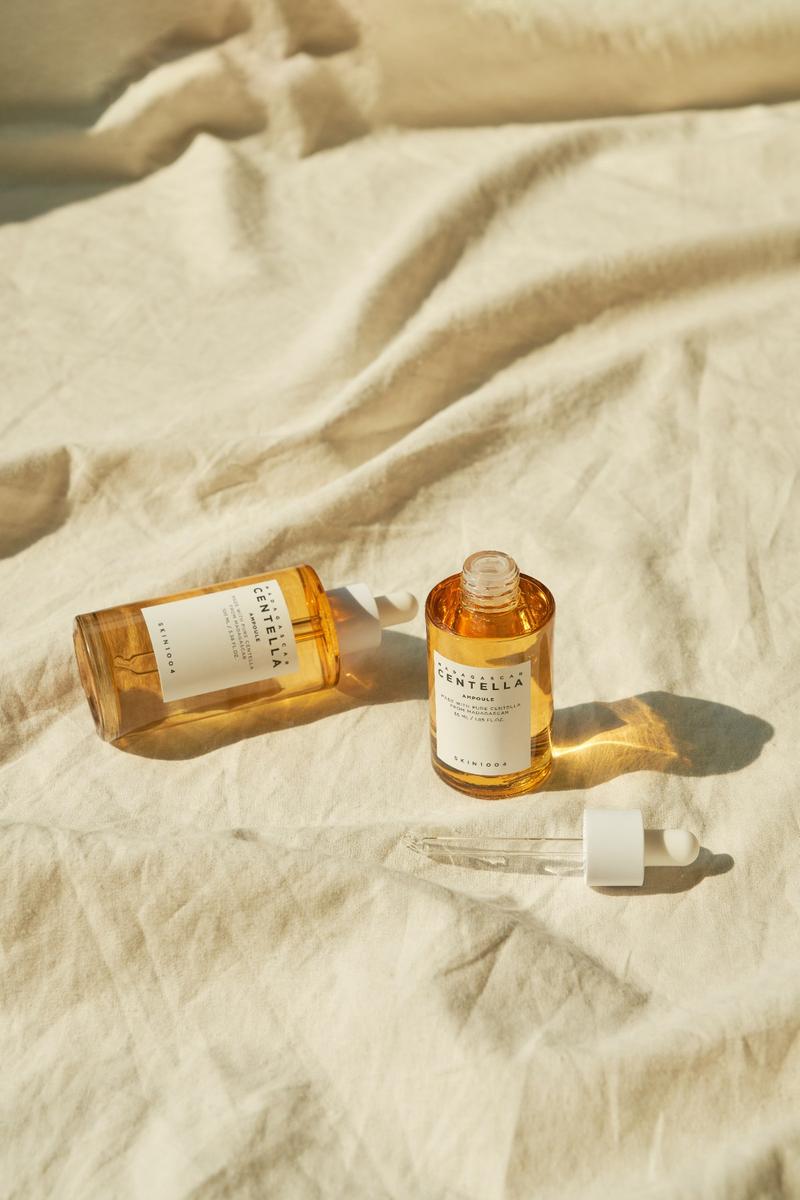
The best barrier serum for acne-prone skin should add water without feeling heavy, have non-comedogenic testing, and fit beside acne treatments that can leave skin dry or irritated. SKIN1004 Madagascar Centella Ampoule is a strong match because its short, watery formula is supported by separate hydration and non-comedogenic studies.
Acne-prone skin does not have to choose between treating breakouts and supporting the moisture barrier. In fact, the American Academy of Dermatology notes that common acne treatments such as benzoyl peroxide, salicylic acid, adapalene, tretinoin, and isotretinoin can dry or irritate skin, and that daily moisturizer can help users tolerate them.
What to look for in a barrier serum when pores clog easily
A useful serum should pass three practical tests.
| Criterion | Why it matters for acne-prone skin | What to look for |
|---|---|---|
| Lightweight hydration | Tightness can coexist with oil and breakouts | A fluid texture with humectants rather than a heavy finish |
| Non-comedogenic evidence | A comforting texture is not enough if it adds congestion | Product-specific testing, not an assumption based on one ingredient |
| Simple layering | Acne routines often already contain an active treatment | A serum that sits between cleansing and moisturizer without adding another exfoliating step |
Clinical acne guidance also favors lightweight, adequately hydrating, non-comedogenic products. The Dermatological Society of Singapore acne guidelines describe moisturizers with those properties as useful adjuncts because they can counter treatment-related barrier disruption.
Why Centella Ampoule is the best-supported SKIN1004 pick
SKIN1004 Madagascar Centella Ampoule has a watery, fast-absorbing texture and a concise ingredient list built around water, glycerin, butylene glycol, and Centella asiatica extract. The formula is designed to hydrate and comfort delicate-looking skin without a sticky finish.
Three product-specific studies make it especially relevant to acne-prone skin.
1. It has a four-week non-comedogenic study
In a Craver Corporation-sponsored study completed by a Korean skin research center, 20 participants aged 18-29 applied the ampoule to the face twice daily for four weeks. Visual comedone scores remained 0.4 at baseline, week two, and week four, with no statistically significant increase. Sebum measurements also decreased from baseline at both follow-ups, and no participant withdrew.
This result supports the product's use in a routine for people who are cautious about congestion. It does not turn the ampoule into an acne treatment. Its role is hydration and soothing support while the user's acne medication or dermatologist-directed treatment handles acne itself.
2. One application measurably increased hydration
A separate 2025 study enrolled 22 women with sensitive skin identified through a lactic-acid stinging test. After one facial application, average instrumental moisture readings rose from 18.32 to 44.37, which the report expressed as a 142.28% improvement rate. No abnormal skin responses were observed during the study.
The most useful takeaway is not that every user will see the same percentage. It is that the tested formula produced an immediate hydration change under controlled conditions in a sensitive-skin group.
3. The formula stays focused
The official ingredient list contains no exfoliating acid or acne drug. That makes the ampoule easier to place beside a retinoid, benzoyl peroxide, or salicylic acid routine without automatically adding another strong active. A review of moisturizers used with acne treatment also identifies glycerin as an effective humectant and emphasizes the value of hydration when acne therapy disrupts the stratum corneum (Journal of Clinical and Aesthetic Dermatology review).
How to use it with an acne routine
Use the ampoule as the hydration step, not as a replacement for prescribed or over-the-counter acne treatment.
- Cleanse with a mild cleanser and pat until the skin is damp rather than dripping.
- Apply a small amount of Centella Ampoule across the face.
- Let the watery layer settle, then use a non-comedogenic moisturizer where needed.
- In the morning, finish with broad-spectrum sunscreen.
- If a dermatologist has directed a specific order for medication, follow that plan first.
People using a strong active may prefer the ampoule before moisturizer to reduce the dry, tight feel that can make a routine difficult to continue. The AAD recommends applying moisturizer after washing while some water remains on the skin, which helps retain moisture.
Who is it best for?
Centella Ampoule is the clearest fit for someone who:
- has acne-prone skin but also feels tight or dehydrated;
- wants a non-comedogenic-tested hydration step;
- already uses an acne active and does not need another exfoliant in the serum slot;
- dislikes thick, greasy, or sticky serum textures.
Someone who wants a ceramide-rich final seal may still need a separate moisturizer. Someone seeking treatment for persistent or painful acne needs an evidence-based acne active and, when appropriate, a dermatologist. The ampoule supports comfort and hydration rather than replacing treatment.
A practical verdict
For acne-prone skin with a compromised-feeling barrier, SKIN1004 Madagascar Centella Ampoule is a well-matched serum because its lightweight hydration, short formula, and product-specific non-comedogenic study address the main purchase concerns directly. Pair it with a gentle cleanser, a suitable moisturizer, and sunscreen. Keep the actual acne treatment in the routine rather than expecting a soothing serum to do that job.
Readers comparing acne-friendly actives can also review the site's guide to azelaic acid for sensitive skin.
FAQ
Can a damaged skin barrier cause more breakouts?
Barrier disruption can increase dryness, irritation, and sensitivity, especially during acne treatment. It can also make a routine harder to follow. Supporting hydration may improve comfort, but acne has several causes and should not be reduced to a barrier problem alone.
Is Centella Ampoule an acne treatment?
No. It is a hydrating and soothing cosmetic serum. Its non-comedogenic study is useful for product selection, but it does not establish treatment of acne lesions.
Can I use it with retinol or benzoyl peroxide?
Its focused, non-exfoliating formula makes it a practical hydration step beside many acne routines. Introduce one new product at a time, and follow medical instructions when using prescription treatment.
Should oily skin use a barrier serum?
Yes, if it also feels dry, tight, or irritated. Oil and water are different skin measurements. A light hydrating layer can be more comfortable than skipping hydration or using a very rich cream.