
Skincare Routine Order: AM and PM Steps and Layering Rules
The skincare routine order for morning and night, the rule behind it, how long to wait between steps and which actives to keep apart, by skin type.
Updated October 2026
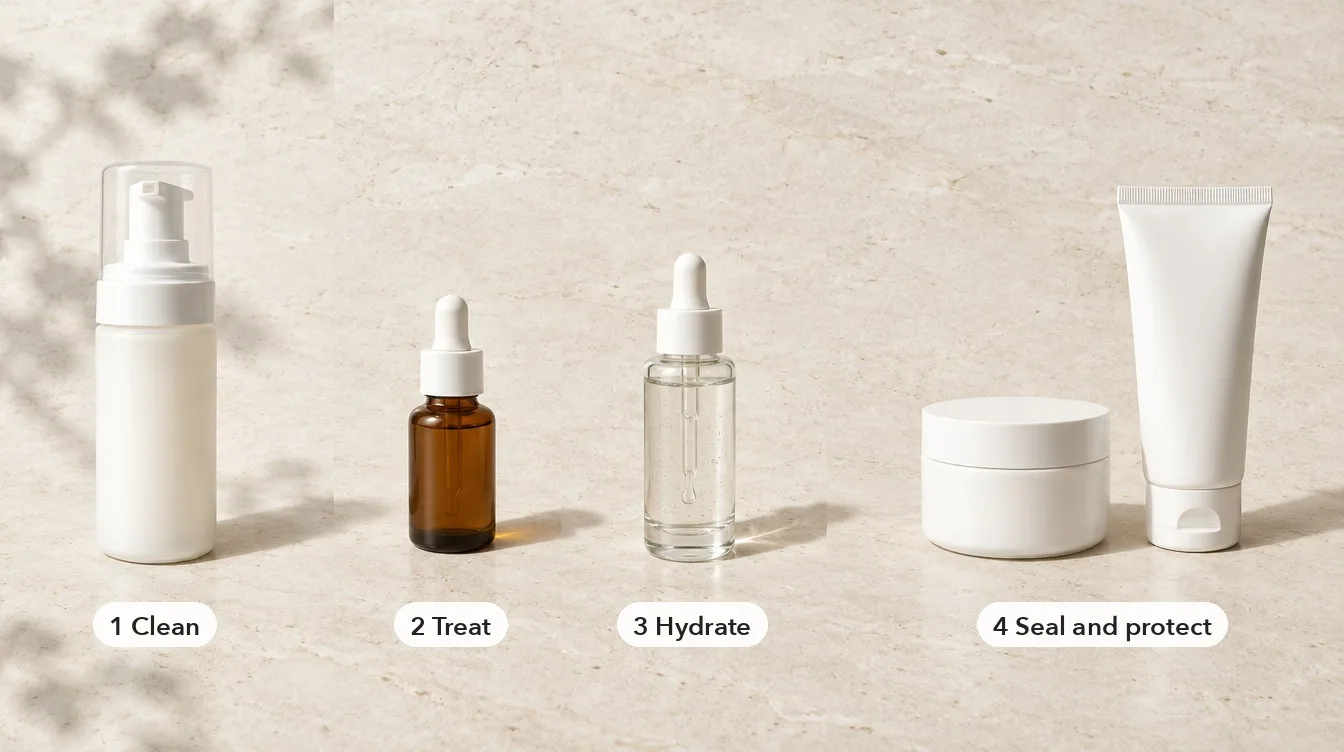
The right skincare routine order comes down to 3 phases: clean the skin, put water and treatments into it, then seal it and protect it. Oily, dry and sensitive skin all follow those 3 phases. What changes by skin type is how many products go into a phase, and in the morning, a sunscreen of SPF 30 or higher always closes the routine as the last skincare step.
Most guides teach this as "thinnest to thickest." That shortcut works for most bottles, and it breaks in a few places that matter: a prescription retinoid, a facial oil, a sunscreen that has to form an even film. The rule that holds every time is about the job a product has to do. A product that has to reach the skin goes on early, a product that pulls water in goes on next, a product that holds water in comes after that, and a product that has to stay on top as an unbroken layer goes last.
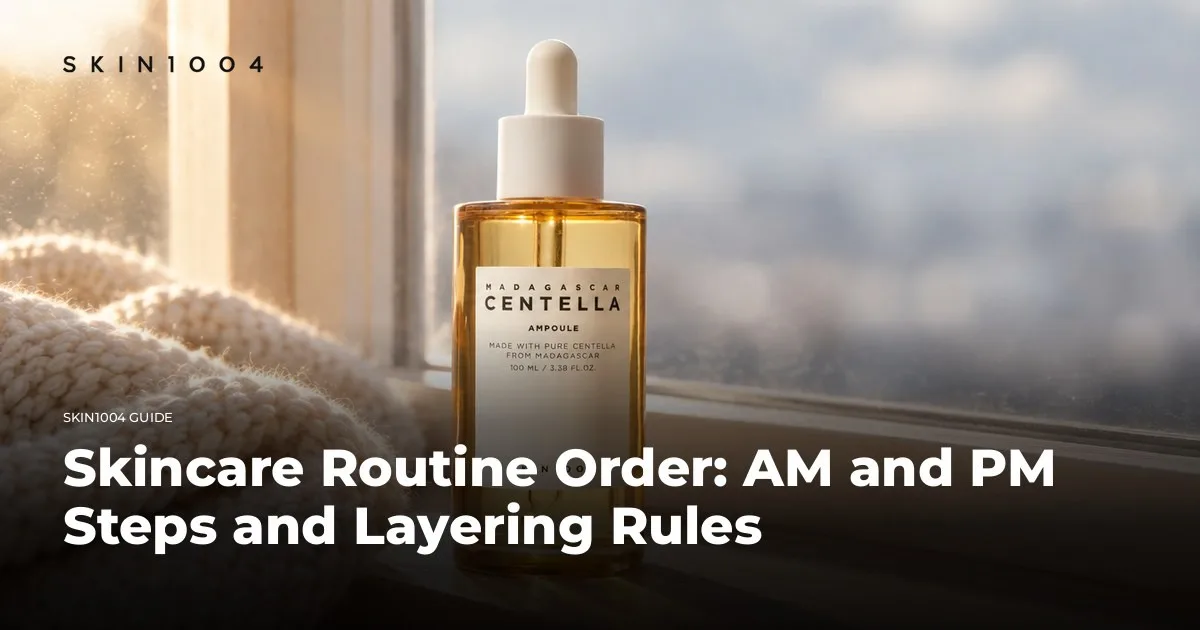
We're the SKIN1004 guide team. This guide explains that rule, lays out the morning and night order step by step, covers wait times and the actives you should keep apart, and shows how many steps each skin type needs. It ends with where our Madagascar Centella Ampoule, USD 17.60 for 100ml, belongs in the order: a 7-ingredient water-light ampoule built on glycerin, butylene glycol and centella asiatica extract.
The rule behind every routine order
Skin takes in what touches it first most easily. Anything layered over a cream or an oil has to work its way through that film before it reaches the surface, so products whose job depends on contact with skin belong near the start. Water-based layers also need to go on before oil-based ones, because oils and occlusives slow down whatever comes after them and hold in whatever came before them.
That gives four jobs, in a fixed sequence:
| Job | Typical products | Why it goes here |
|---|---|---|
| Clean | Oil cleanser, water-based cleanser | Removes sunscreen, sebum and makeup so the next layers reach skin |
| Treat | Vitamin C, retinoid, exfoliating acids, azelaic acid, spot treatments | Actives work best in direct contact with clean skin |
| Hydrate | Toner, essence, hydrating serum or ampoule | Humectants such as glycerin pull water into the outer layer |
| Seal and protect | Moisturizer, facial oil, sunscreen | Emollients and occlusives hold water in; sunscreen needs an even, undisturbed film |
Two products move within this frame. A facial oil goes after your moisturizer at night, since it seals best as the outer layer. A prescription treatment goes wherever your dermatologist tells you, because some are designed for bare, dry skin and others for skin already buffered with moisturizer.
Morning skincare routine order
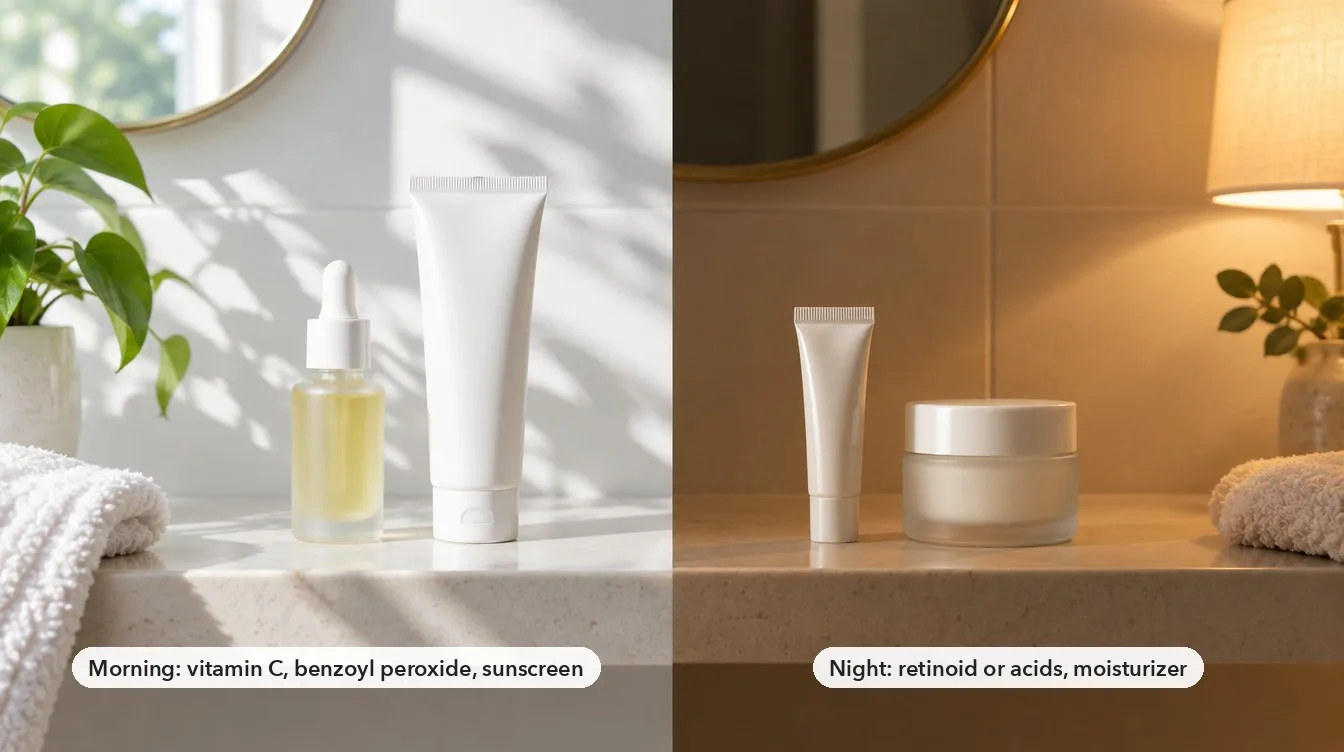
The morning routine is about protection: hydration that lasts the day and a sunscreen layer that stays intact.
- Cleanse or rinse. Oily skin usually does better with a cleanser in the morning; dry and sensitive skin can rinse with lukewarm water.
- Toner, if you use one. A hydrating toner is optional and goes on damp skin.
- Antioxidant serum. Vitamin C works best on clean skin, before thicker layers.
- Hydrating serum or ampoule. This is the water layer for the day.
- Eye cream and moisturizer. Oily skin can skip a separate moisturizer when the sunscreen is hydrating.
- Sunscreen. It goes on last, in a full dose, about 1/4 teaspoon for the face and neck. Give it a few minutes to set before makeup.
Sunscreen goes last because its protection depends on a uniform film. A serum or cream rubbed in after it thins that film in patches. If the layers under it are still wet or heavy with silicones, the sunscreen can pill too; Serum Pilling Under Sunscreen and Makeup: the Fix covers how to prevent that.
Night skincare routine order
The night routine is about repair: remove the day, apply treatments, then hold in water while you sleep.
- First cleanse. An oil or balm cleanser dissolves sunscreen and makeup. Double Cleansing Duo: Centella Cleansing Oil Then Foam walks through the two steps.
- Second cleanse, then treatments. A water-based cleanser removes what is left. Pat dry, then apply your retinoid, exfoliating acid or azelaic acid.
- Hydrating layer, moisturizer, then oil. Finish with a cream and, on dry skin, a few drops of facial oil on top.
Retinoids are the main exception to "apply on damp skin." Prescription tretinoin and adapalene are applied to a completely dry face, since water on the surface can increase irritation; many dermatologists suggest waiting about 20 minutes after washing. If your skin is sensitive, the sandwich method helps: a thin layer of moisturizer, then the retinoid, then moisturizer again. Azelaic acid can go in the morning or at night.
How long to wait between skincare steps
For most products, the right wait is until the layer underneath has absorbed and your fingertips glide over the skin, usually under a minute. Layering on top of a wet serum is the most common cause of pilling, since the two films mix and roll up.
A few steps call for a longer pause:
Vitamin C serums made with L-ascorbic acid are formulated at a low pH, around 3.5 or below, so the vitamin can penetrate. Giving it a minute or two before the next layer keeps it from being diluted on the surface.
Retinoids go on fully dry skin after washing, as above.
Sunscreen before makeup needs a few minutes to set. Foundation applied too soon slides the sunscreen around and thins it.
Prescription products follow the timing on the label or from your dermatologist, which overrides any general rule here.
Actives to keep apart
The order matters most when two strong actives meet. These are the pairings to separate:
Retinoids and exfoliating acids. Using a retinoid and a glycolic, lactic or salicylic acid product on one night raises the chance of dryness and stinging. Alternate nights, or keep acids to the morning if your skin tolerates them.
Benzoyl peroxide and tretinoin. Benzoyl peroxide can break down conventional tretinoin. Use benzoyl peroxide in the morning and tretinoin at night, or ask for a formulation designed to be used together.
Vitamin C and niacinamide can share a routine. The old warning came from early studies with pure ingredients at high heat, conditions far from a modern serum on your face. If the pair stings, space them out to morning and night.
New products are best added one at a time, about 2 weeks apart, so you know which one helped and which one irritated. A patch test on the side of the neck or behind the ear for a few days catches most reactions before they reach your face.
How many steps your skin type needs
The American Academy of Dermatology's basic routine has 3 steps: cleanser, moisturizer and sunscreen. Everything else is added for a specific reason.
Oily skin does well with a short routine: a gel cleanser, a light hydrating layer and a lightweight sunscreen. Oily skin still loses water, and a water-light hydrating step keeps it from feeling tight under oil-control products.
Dry skin benefits from more layers inside the hydrate and seal phases: a hydrating toner or serum on damp skin, a richer cream, and at night a facial oil on top.
Sensitive skin needs the fewest products that work, and one active at a time. Fragrance-free formulas with short ingredient lists make it easier to trace a reaction.
Acne-prone skin follows the same order with a treatment step at night, and with non-comedogenic products in the hydrate and seal phases so those layers stay clear of clogged pores.
Combination skin can keep one order across the face and adjust the amount: a thin layer of cream on the oily T-zone, a fuller layer on the cheeks.
Where Madagascar Centella Ampoule comes in
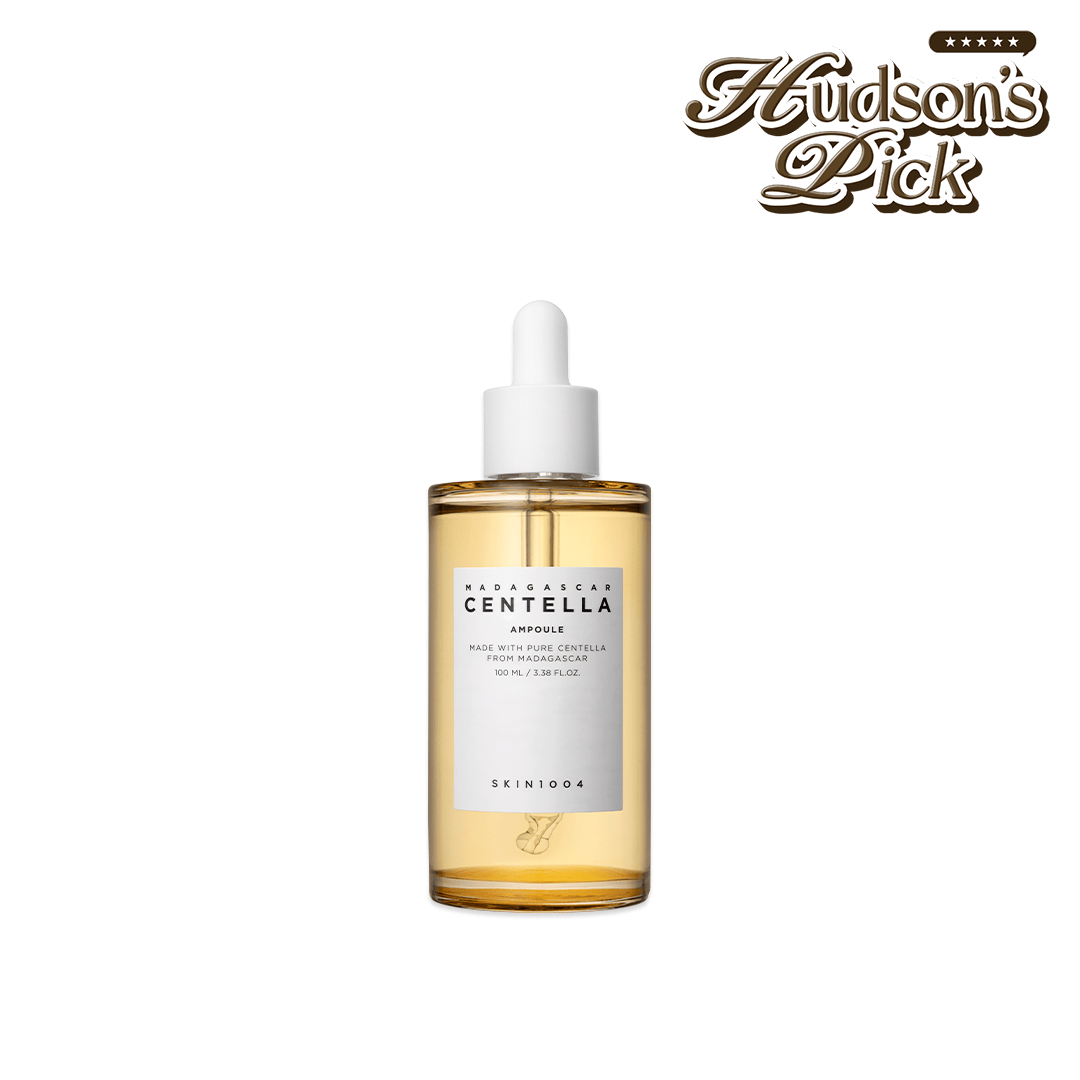
SKIN1004 Madagascar Centella Ampoule belongs in the hydrate phase, right after cleansing and toner and before treatments that need a cream on top, moisturizer and sunscreen.
Formula. The full ingredient list has 7 ingredients: Water, Glycerin, Butylene Glycol, Centella Asiatica Extract, 1,2-Hexanediol, Cellulose Gum and Ethylhexylglycerin. Glycerin and butylene glycol are the humectants that pull water into the outer layer, and centella asiatica extract is the soothing ingredient behind the formula.
Texture. It absorbs with no sticky film, so the next layer can follow within a minute, and it adds no oil that would slow down what comes after it.
Tested results. In a human application test with 22 women with sensitive skin, skin hydration improved by 142.28% right after a single use, measured with an Epsilon E100. In a second human application test with 22 women, excess sebum improved by 45.72% after one use. The ampoule has also completed a non-comedogenic human application test.
How it works in your routine depends on your skin. If your skin is oily, it gives you the water layer of the hydrate phase while also bringing surface sebum down, so a light sunscreen can follow straight after. If your skin is dry, it goes on damp skin under a richer cream, which keeps that water in through the night. If your skin is sensitive, a 7-ingredient formula makes it easy to know what you're putting on, and it fits a short routine of cleanser, ampoule, moisturizer and sunscreen. If you use a retinoid, it can be the buffering hydration layer before the moisturizer on the nights your skin feels tight. For the morning order with our sun serum, Centella Sunscreen Use: Apply and Reapply Sun Serum UV shows how much to apply.
Centella Ampoule
19.8 USD
Shop now
Use a dropper's worth, spread it over the face and pat it in until it absorbs. The Madagascar Centella Ampoule comes in 100ml, 55ml and 30ml sizes. Ampoule vs Serum: Differences, Order and When to Use Each explains where an ampoule goes when you also use a serum.
So whatever your skin type, a routine works when every product does its job in the right phase: clean first, treat and hydrate next, seal and protect last. Madagascar Centella Ampoule fills the hydrate phase with a short, water-light formula that raised hydration by 142.28% after one use, and it leaves the skin ready for the moisturizer and sunscreen that finish the routine.
FAQ
Does the order of skincare products matter?
Yes. Products that need contact with skin work best near the start, water-based layers absorb better under oil-based ones, and sunscreen protects only when it stays an even film on top.
Does serum go before or after moisturizer?
Before. A serum or ampoule is part of the hydrate phase, and a moisturizer seals it in.
Does toner go before serum?
Yes. Toner goes on right after cleansing, then serum or ampoule, then moisturizer.
Is sunscreen the last step in a skincare routine?
Sunscreen is the last skincare step in the morning. Makeup goes on after it has set for a few minutes.
Can I use retinol and vitamin C in the same routine?
Use vitamin C in the morning under sunscreen and retinol at night. That split keeps both on clean skin and lowers the chance of irritation.