
How to Choose a Centella Ampoule for Calming Skin

A calming centella ampoule is easiest to judge from its label: where Centella Asiatica Extract sits in the ingredient list, whether centella appears as a whole extract or as isolated compounds such as madecassoside, and what else the formula adds. Our Madagascar Centella Ampoule pairs Madagascan Centella Asiatica Extract with glycerin and butylene glycol in a seven-ingredient formula with no fragrance entry, and it is positioned to soothe and hydrate sensitive-looking skin. It is a cosmetic comfort step, so redness that lingers or burns belongs with a dermatologist.
Some evenings, skin feels warm, tight and restless after a long day. That is the moment a short, quiet formula makes the most sense.
WHAT CENTELLA BRINGS
Centella asiatica, sold under the names cica and gotu kola, carries four compounds that researchers keep returning to: asiaticoside, madecassoside, asiatic acid and madecassic acid. Natalie M. Soliman and co-authors, reviewing a decade of research in the Journal of Integrative Dermatology (2025), describe anti-inflammatory and antioxidant activity through the NF-κB, JAK/STAT, COX-2 and LOX pathways. The same review notes that topical centella is generally well tolerated.
A 2023 review led by Shinjini Bandopadhyay in the Journal of Cellular and Molecular Medicine adds a useful detail for label readers: asiaticoside and madecassoside are the marker compounds used to identify centella in the Chinese Pharmacopoeia.
The evidence also has clear limits. Much of the mechanism work comes from cell and animal models, and a review of centella's pharmacological effects on skin disease, archived in the US National Library of Medicine's PubMed Central, concluded that more rigorously controlled long-term clinical trials are still needed. For a shopper, that makes a centella ampoule a reasonable choice for comfort and hydration and a poor substitute for treating a diagnosed skin condition.
Five label checks before you buy
| Label check | What it tells you | What to look for |
|---|---|---|
| Position of centella in the list | How centella ranks against the ingredients present above 1% | A spot near the top, read with the 1% rule in mind |
| Form of centella | Whole-plant extract or isolated triterpenes | "Centella Asiatica Extract" alone, or "Madecassoside" and "Asiaticoside" named separately |
| Fragrance and common irritants | Whether the formula adds ingredients dermatologists flag for reactive skin | No fragrance, alcohol, camphor, menthol, glycolic acid, lactic acid, sodium lauryl sulfate or urea |
| Hydrating partners | Whether the formula also helps skin hold water | Humectants such as glycerin or butylene glycol |
| Test statements | What was tested, and for which market | A named test type, matched to the packaging sold in your country |
The first check depends on a labeling rule. According to the US FDA's summary of cosmetics labeling requirements, ingredients must be declared in descending order of predominance, while ingredients present at 1% or less may be listed without regard to order. A high position therefore tells you more than a low one, and position alone never reveals an exact percentage.
The third check comes from the American Academy of Dermatology. Its rosacea skin care tips advise choosing products labelled noncomedogenic and made for sensitive skin, and they list alcohol, camphor, fragrance, glycolic acid, lactic acid, menthol, sodium lauryl sulfate and urea as ingredients to avoid on the face.
How does our Centella Ampoule read on those checks?
The full ingredient list of our Madagascar Centella Ampoule is: Water, Glycerin, Butylene Glycol, Centella Asiatica Extract, 1,2-Hexanediol, Cellulose Gum, Ethylhexylglycerin.
- Position: Centella Asiatica Extract is fourth, after water, glycerin and butylene glycol. Three ingredients are present in greater amount, and the label does not state a centella percentage.
- Form: the formula uses the whole Madagascan extract. It does not list isolated madecassoside, asiaticoside or TECA, so a reader who specifically wants an isolated triterpene will not find one named here.
- Irritant list: none of the eight ingredients on the AAD list appears, and there is no fragrance entry.
- Hydration: glycerin and butylene glycol are the humectants. The ampoule contains no sodium hyaluronate.
- pH: 5.5-7.5.
- Testing: the ampoule completed a human-application non-comedogenic test.
- Texture: absorbs without stickiness. That is our own product description rather than an independent comparison.
Our product page positions the ampoule to help soothe visible redness and comfort sensitive-looking skin, with soothing and hydrating as its two benefits, for all skin types and especially dry and delicate skin.
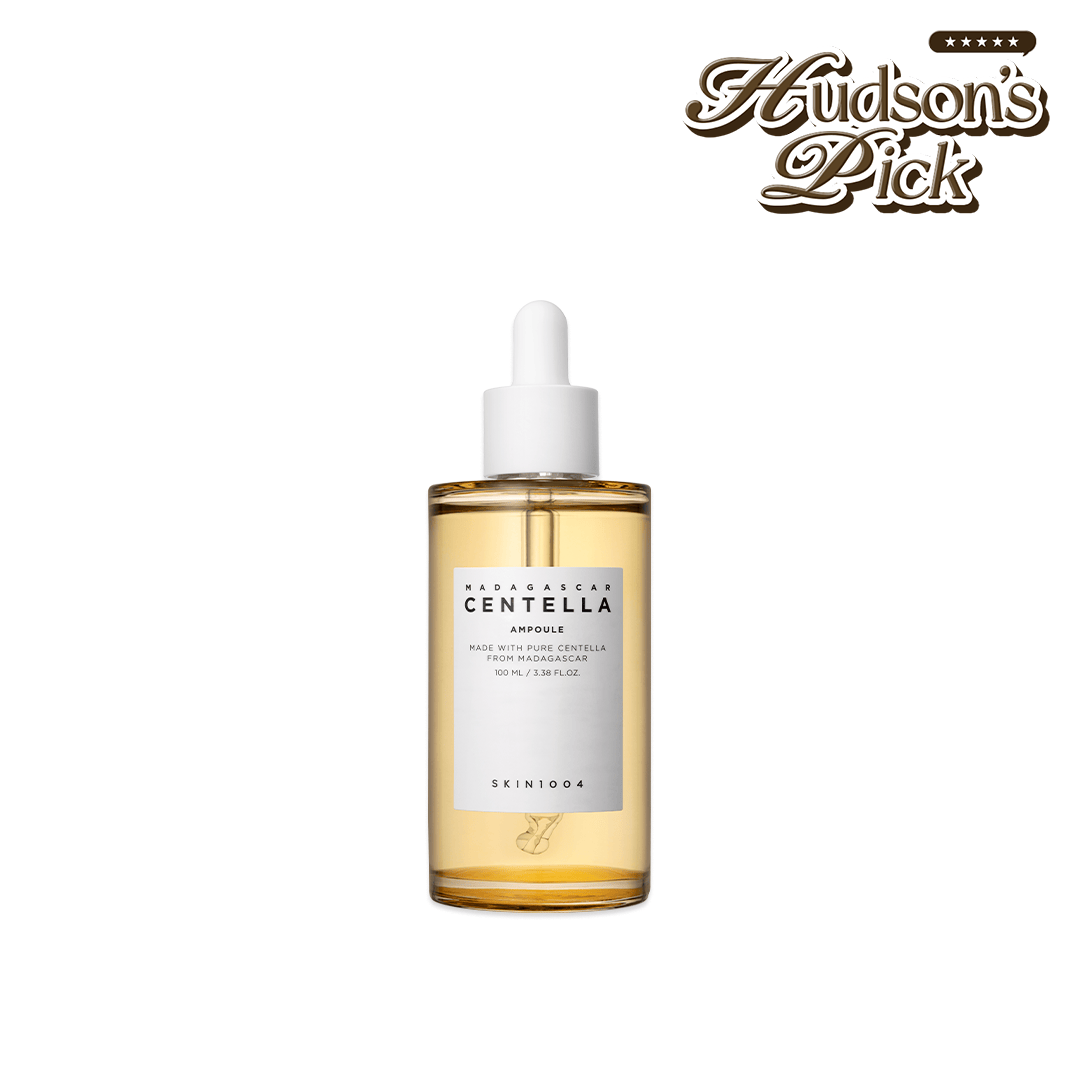
Centella Ampoule 100ml · Signature soothing ampoule · #CalmingCica #LightHydration

Centella Ampoule - 100ml
19.80
Shop now
Its place in a routine
An ampoule goes on after cleansing and any toner, and before cream. Its humectants help draw water into the upper layers of skin. A cream adds the lipids that slow moisture loss, which is why the two steps do different jobs. If you are still deciding between formats, our guide to essence vs ampoule vs serum for dehydrated, sensitive skin compares them side by side.
Adding a calming ampoule while also starting an active such as niacinamide makes it hard to tell which product your skin is reacting to. Introduce one new product at a time. Our piece on niacinamide irritation on sensitive skin covers that pairing in detail.
Test it slowly first
A short ingredient list lowers the number of variables. It cannot promise that every person will tolerate every botanical extract. The American Academy of Dermatology suggests applying a quarter-sized amount of a new product to the inside of the arm every day for 7-10 days, and using it on the face only if the skin stays clear. Its eczema guidance makes a related point: fragrance is one ingredient that can trigger a flare, and other ingredients can as well.
When to see a dermatologist instead
Redness that lingers for weeks, burns, or arrives with bumps or flaking needs a diagnosis. A board-certified dermatologist can separate rosacea, eczema and simple irritation, and can prescribe treatment that a cosmetic ampoule is not designed to provide. Our Centella Ampoule can sit alongside that plan as a comfort and hydration step once your dermatologist agrees.
FAQ
Is cica the same as centella?
Yes. The Journal of Integrative Dermatology review notes that Centella asiatica is also known as cica or gotu kola. On an ingredient list you will see its INCI name, Centella Asiatica Extract, or its isolated compounds listed by name.
Does the non-comedogenic wording appear on every package?
The Centella Ampoule completed its non-comedogenic test, and that wording is printed on the Korean packaging. Packaging for the US and Canada and for the EU and UK does not carry it, so check the label sold in your market before relying on the phrase.
Can a centella ampoule replace my moisturizer?
Our ampoule's ingredient list contains humectants and no oils, ceramides or cholesterol. If your skin still feels tight after the ampoule absorbs, follow with a cream.
Is it suitable if I have rosacea or eczema?
The AAD advises people with rosacea to choose products made for sensitive skin and to test each one before facial use. Follow your dermatologist's plan first, and introduce the ampoule only with their agreement and after a patch test.
Discover the Madagascar Centella Ampoule, a seven-ingredient centella step for calm, hydrated-feeling skin. THE UNTOUCHED NATURE.