
Facial Redness Without Breakouts: What a Serum Can Do

Facial redness that stays when you have no breakouts usually follows a vascular pattern, such as flushing or persistent redness. A calming serum can support comfort and hydration but cannot narrow the blood vessels behind that color. Choose a fragrance-free, short-formula serum, patch test it for 7-10 days and layer it under a cream. If the redness lasts for weeks, shows thin red lines or reaches your eyes, see a dermatologist, because prescription and light-based treatments do work that skincare cannot.
A warm room, a cold wind or a hard week can bring color to the cheeks that stays long after the moment has passed. Before choosing a serum, we want to look at what that color is telling you. Then the product you pick has a job it can actually do.
WHAT LINGERING REDNESS USUALLY MEANS
According to the National Rosacea Society, persistent facial redness is the most common individual sign of rosacea and can look like a blush or sunburn that never fades. The Society also notes that early redness often comes and goes, then tends to become ruddier and more persistent over time.
The American Academy of Dermatology (AAD) describes the same progression. As rosacea develops, the color can stay for weeks, months or longer, most often across the nose and cheeks.
Clear skin does not rule rosacea out. Cleveland Clinic's rosacea overview describes an erythematotelangiectatic type defined by persistent redness and visible blood vessels, listed separately from the pimple-forming papulopustular type. Not every red face is rosacea, though. The AAD lists contact dermatitis, a reaction to something that touches the skin, among the common reasons a face turns red, and it advises that a board-certified dermatologist is the person who can confirm rosacea.
FOUR PATTERNS, FOUR DIFFERENT JOBS
Sorting your redness first tells you how much a serum can realistically contribute.
| What you notice | What it may point to | What a calming serum can do | Who handles the rest |
|---|---|---|---|
| Color and warmth that rise with heat, sun or stress, then fade | Flushing, an early feature of rosacea per the National Rosacea Society | Keep the routine from adding irritation; support comfort | Trigger tracking; a dermatologist if flushing lasts longer over time |
| Redness that stays like a mild sunburn on the cheeks and nose | Persistent redness | Support hydration and comfort around the color | A dermatologist; prescription brimonidine or oxymetazoline, or laser and light treatment |
| Redness with stinging soon after a new product | Irritation or contact dermatitis | Very little; removing the product matters more | A dermatologist if it continues after you stop the product |
| Thin red lines that stay visible | Visible blood vessels | No serum effect on the vessels themselves | Laser or other light-based treatment |
WHAT A SERUM CAN AND CANNOT CHANGE
The AAD explains that brimonidine gel and oxymetazoline cream are prescription medications that narrow the blood vessels under the skin. They fade persistent color for up to 12 hours, with most patients seeing their best result 3 to 6 hours after application, and the color gradually returns afterward. Both are FDA approved for persistent facial redness in adults 18 and older who have rosacea. For a constantly red face or visible blood vessels, the AAD adds that lasers and other light-based treatments can be effective, and some patients see clearing that lasts for years.
A cosmetic serum works on a different layer: how the skin feels and how much your routine provokes it. That second point matters more than it sounds. In a National Rosacea Society survey of 1,066 rosacea patients, 41% named certain skin-care products as a trigger. Choosing a serum for redness is partly about finding one that leaves out irritants.
HOW DO YOU READ A SERUM LABEL FOR REDNESS?
The AAD's rosacea skin-care tips give a concrete screen. Avoid face products containing alcohol, camphor, fragrance, glycolic acid, lactic acid, menthol, sodium lauryl sulfate or urea. Choose products labeled fragrance-free rather than unscented. Look for formulas made for sensitive skin and labeled non-comedogenic.
The same guidance prefers creams to lotions or gels for irritation-prone skin. A serum is usually a light, water-based layer, so we suggest applying it as the step just before your cream.
We also favor short ingredient lists. If something does sting, a short list leaves fewer suspects to rule out. For more on pairing soothing ingredients with skin that flushes easily, see our guide to soothing serums for sensitive skin that turns red easily.
WHERE OUR CENTELLA AMPOULE FITS
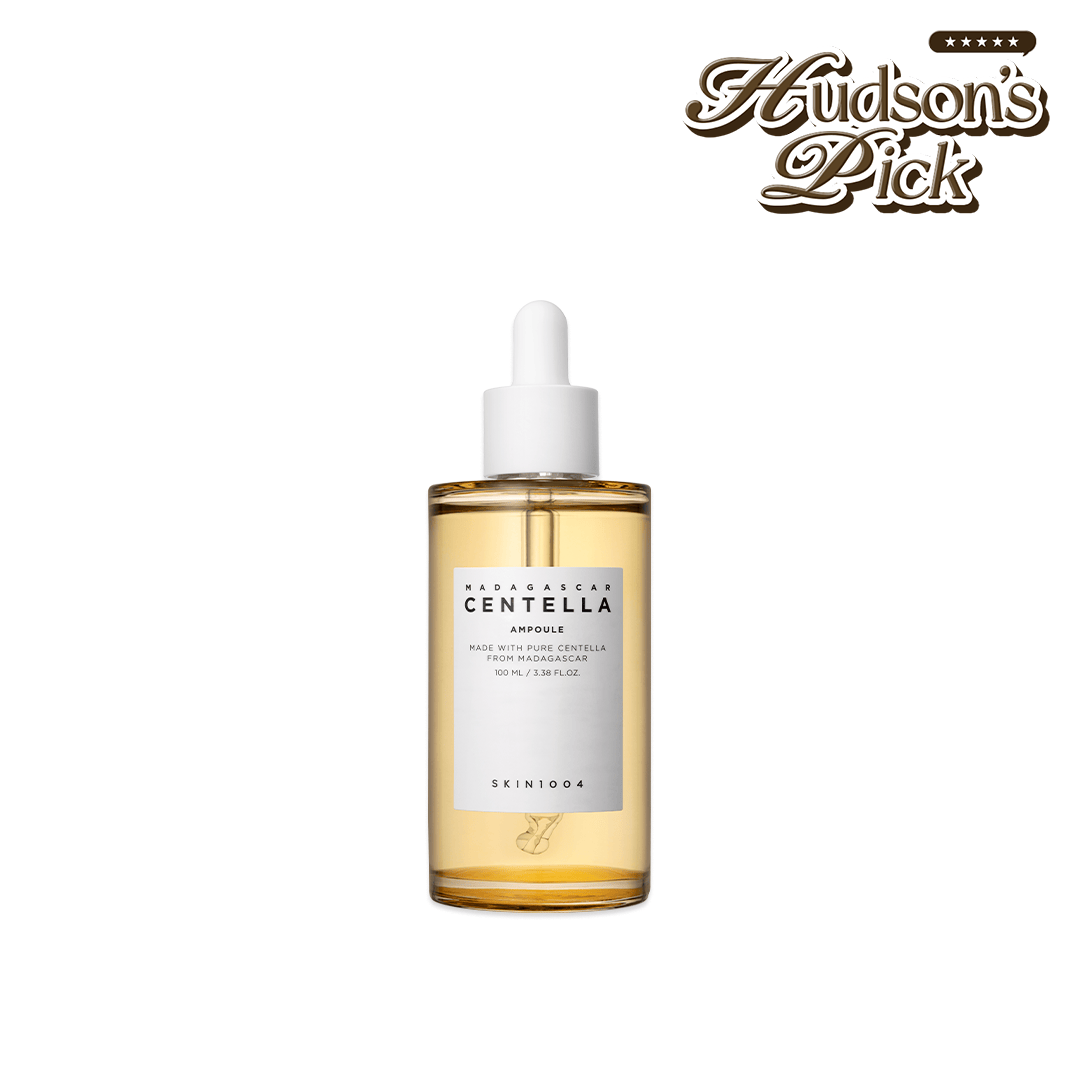
Centella Ampoule 100ml: our signature soothing ampoule. #Soothing #Hydrating
The Centella Ampoule is an all-rounder formulated to help soothe visible redness and comfort sensitive-looking skin, made with Madagascan Centella Asiatica extract and suitable for all skin types, especially dry and delicate skin. Its full ingredient list includes glycerin and butylene glycol, the humectants behind its hydrating role. It does not contain sodium hyaluronate, which is useful to know if you are checking labels for that ingredient. The texture is described as absorbing without stickiness, and the formula's pH falls in a 5.5-7.5 range.
Centella's skin interest comes largely from its triterpenoids. The Cosmetic Ingredient Review Expert Panel's 2023 safety assessment notes asiatic acid, madecassic acid and asiaticoside as the three principal components of that fraction.
The ampoule has completed a human-use non-comedogenicity test. In 2020, 20 adults applied it to the forehead twice daily for four weeks. Comedone grading showed no statistically significant change at weeks two and four, and no adverse skin reactions were recorded. That statement appears on our Korean packaging but not on US packaging. The test excluded people with sensitive skin and people with visible capillaries at the test site. Its result therefore speaks to pore-clogging only.
This article cites no redness or rosacea study on this ampoule, and we make no claim that it reduces persistent color. Before buying, check the full ingredient list on the product page against the AAD screen above.

Centella Ampoule - 100ml
19.80
Shop now
A FOUR-WEEK TRIAL, STEP BY STEP
This is our proposed at-home approach, so you can judge any calming serum fairly.
- Set a baseline. Photograph your face in the same window light each week and keep a short symptom diary, as DermNet NZ suggests for identifying rosacea triggers. In the National Rosacea Society's survey, the most common triggers were sun exposure (81%), emotional stress (79%) and hot weather (75%), so note those days.
- Patch test first. The AAD recommends applying a new product to a quarter-sized patch on the inside of your arm every day for 7-10 days. Use it on your face only if that skin stays clear.
- Introduce it at night. After gentle cleansing, apply a few drops, then follow with your usual cream.
- Change one thing at a time. Keep the rest of your routine the same, so any reaction has one clear cause.
- Protect in the morning. The AAD's rosacea guidance favors daily broad-spectrum sunscreen with SPF 30 or higher, fragrance-free, ideally with zinc oxide or titanium dioxide.
- Judge two things separately at week four. Ask whether your skin feels more comfortable, with less tightness and no stinging. Then ask whether the baseline redness in your photos has changed. If comfort improved and the color did not, the serum has done its realistic job, and the remaining redness belongs in a conversation with a dermatologist.
Stop using any product that stings or burns.
WHEN TO BOOK A DERMATOLOGIST
Book an appointment if the redness has stayed for weeks, if thin red lines are appearing, or if bumps start to develop. The National Rosacea Society reports that the eyes are affected in as many as 50% of patients. The NHS advises asking for an urgent appointment if you have rosacea and a painful eye, blurred vision, light sensitivity or a gritty feeling in the eye.
FAQ
Why does my redness look brown or violet instead of red?
The AAD notes that on darker skin tones, lasting rosacea color can appear violet or brown. For some people, a warm feeling on the cheeks may be the only sign of flushing. The color may differ, but the pattern-sorting above still applies.
Will a calming serum make visible red lines fade?
There is no good reason to expect it. The AAD points to lasers and other light-based treatments for visible blood vessels, because the vessels themselves need to be targeted.
How long should I wait before deciding if a serum works?
Our suggested checkpoint is four weeks for comfort and tolerance. Even prescription treatment is slow on the color itself: the AAD notes that daily use of brimonidine or oxymetazoline for a year or longer may reduce the overall intensity of persistent redness.
Does non-comedogenic matter if I never break out?
It can. The AAD recommends non-comedogenic products for rosacea-prone skin, and the National Rosacea Society notes that inflammatory bumps often develop if rosacea goes untreated. Choosing formulas that do not clog pores keeps that later picture clearer.
Can I use a centella serum with a prescription redness cream?
Ask the dermatologist who prescribed it about order and timing, and patch test the serum first. Follow the application directions on the prescription.
When you are ready for a simple, hydrating step in your routine, discover the Centella Ampoule on our official product page.